

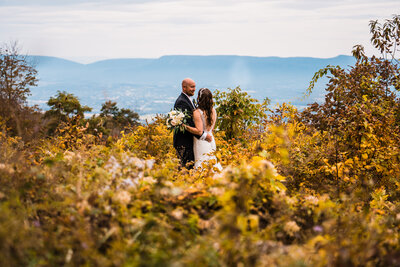




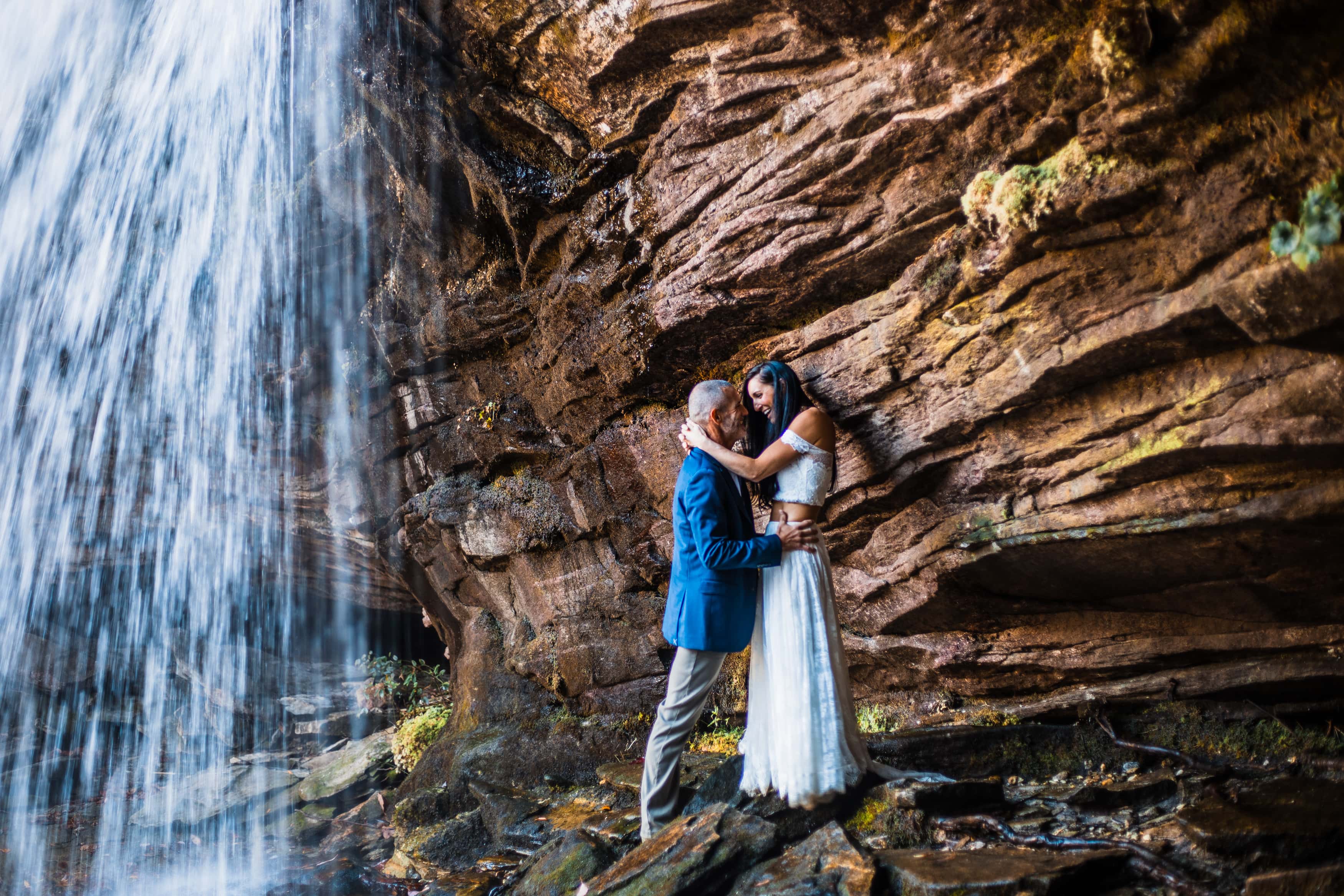
When you first start thinking about eloping, it’s easy to assume the timeline should be short.
Maybe even really short.
After all, if you’re not having a traditional wedding, do you really need more than an hour or two?
You might be picturing something simple:
show up
exchange vows
take a few photos
and be done
And on the surface, that makes sense.
A lot of couples are drawn to elopements because they don’t want the pressure of a traditional wedding day. They don’t want a packed timeline, a room full of obligations, or the feeling of being pulled in every direction.
So the natural reaction is:
“Let’s keep it simple.”
We agree with that.
But simple does not have to mean rushed.
And your elopement should not be reduced to the smallest possible version of a wedding day.
Because your elopement is not just a ceremony and a few photos.
It’s where you wake up.
Where you get ready.
Where you exchange vows.
Where you spend time together.
Where you include your people, if they’re there.
Where you explore, eat, rest, laugh, take in the view, and actually experience the place you chose.
So the better question isn’t only:
“How many hours of photography do we need?”
It’s:
“What kind of experience are we trying to create, and how much space does that experience need?”
That’s what this guide is really about.
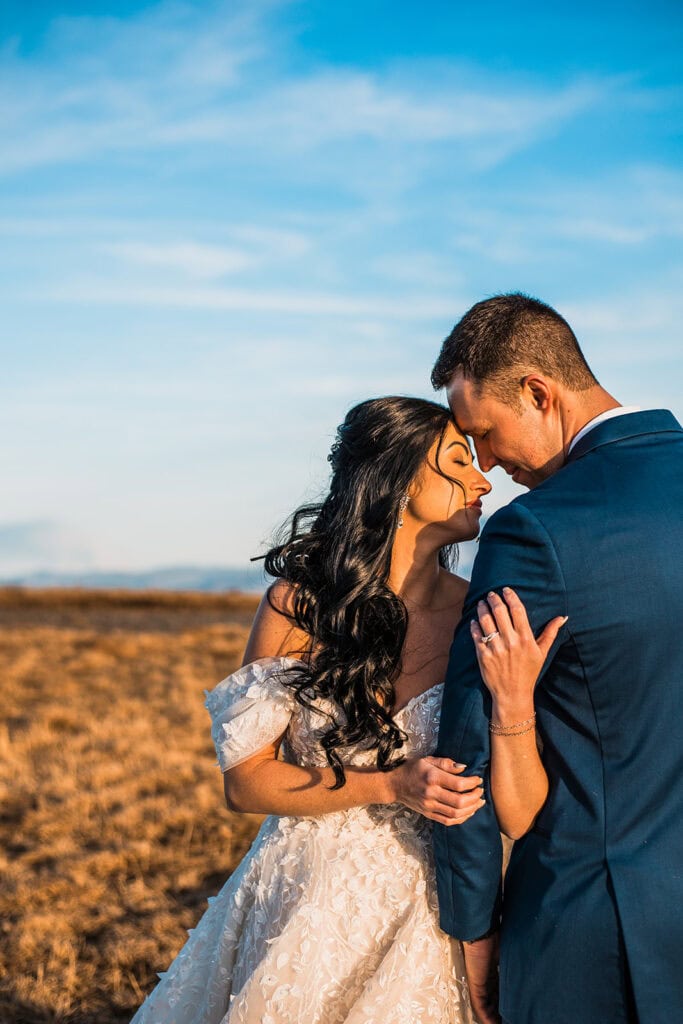
Quick Answer: Elopement Timeline Examples
There is no one standard amount of time for an elopement.
The better question is:
What kind of experience are you trying to create?
Here’s a simple way to think about different elopement timelines:
|
Elopement Experience |
Typical Time |
Best For |
What to Understand |
|
Ceremony-Only Elopement |
1–2 hours |
A quick ceremony and a few portraits |
This is the most compressed version of an elopement. It can work if you truly want something simple, but it usually feels more like a quick appointment than a full wedding-day experience. |
|
Ceremony-Centered Elopement |
4 hours |
Just the two of you, one primary location, simple ceremony, intentional time before and after |
This is usually the minimum amount of time needed for the day to feel intentional instead of rushed. The ceremony is still the center of the experience, but there is space to settle in, explore, and be present. |
|
Ceremony + Adventure Elopement |
6–8 hours |
One main ceremony location plus an additional experience, Airbnb time, small group, or light travel |
This gives the day more shape. You can include more of the story: the start of the day, the ceremony, time with guests if present, and a meaningful experience afterward. |
|
Complete-Day Elopement |
8–12 hours |
Getting ready, ceremony, guests and private time, multiple locations, dinner or celebration |
This is where the day can fully breathe. You are not just documenting a ceremony; you are designing a complete wedding-day experience from beginning to end. |
|
Multi-Day Elopement |
2 days |
Family one day, private adventure another day, destination-style experiences, deeper emotional pacing |
This gives the experience room to unfold across different parts: shared moments, private moments, adventure, rest, and the feeling of waking up married without rushing into or out of it. |
We’ll walk through each of these in more detail below, but the important thing to understand is this:
The right timeline is not about choosing the smallest number of hours that sounds possible.
It’s about creating enough space for the experience you actually want.
Your Elopement Is Not a Photo Shoot
A lot of couples start by thinking about their elopement in terms of photography coverage.
That makes sense.
Photography is often the first tangible thing you compare when you’re looking at packages.
But your elopement is not a photo shoot.
It’s not just:
showing up
saying vows
taking a few portraits
and leaving
At least, it doesn’t have to be.
Your elopement is your wedding day.
The photos matter because the experience matters.
The ceremony matters because it’s part of the story.
The portraits matter because they help you remember how the day felt.
The location matters because it shapes the atmosphere.
The timeline matters because it determines whether you feel rushed or present.
If you think of your elopement as a quick ceremony and a few portraits, one or two hours might sound reasonable.
But if you think of it as your actual wedding day, the timeline starts to look different.
You begin to think about:
where you’re staying
how the morning feels
whether you want to get ready together or separately
who will be with you
how you’ll get to the ceremony location
whether you want time alone afterward
where you’ll eat
what else you want to experience nearby
how you want the day to end
That’s the difference between booking a few hours of coverage and designing an elopement experience.
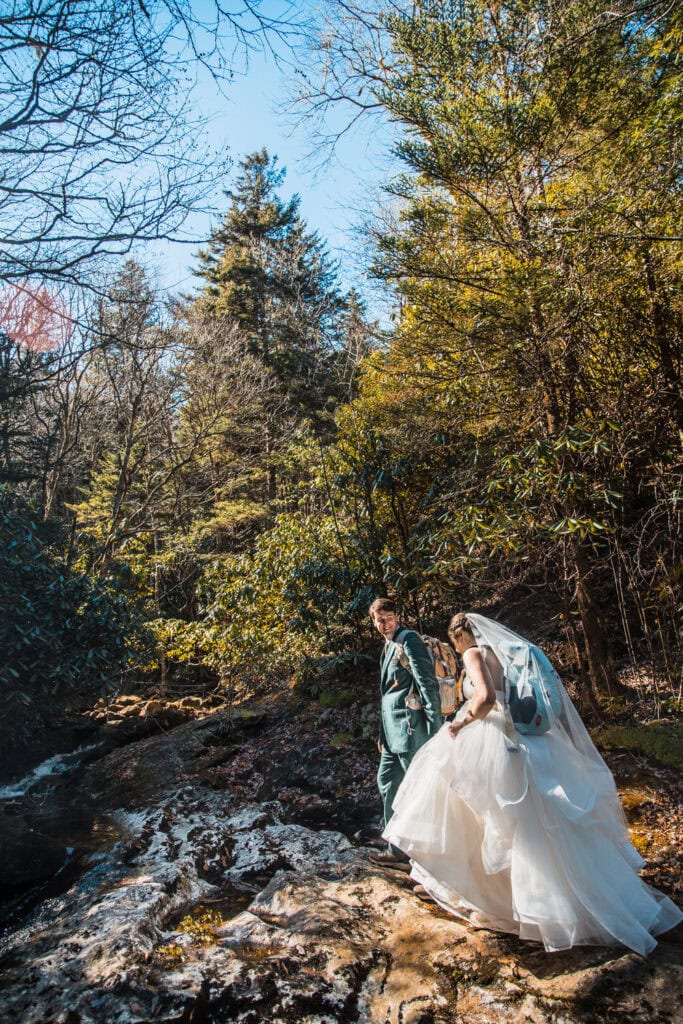
Think of It Like Planning a Meaningful Trip
Imagine you’re planning a trip to the mountains.
There’s a specific overlook you really want to visit.
Maybe that overlook is the reason you chose the destination in the first place.
But the trip is not only about the one hour you spend standing at the overlook.
The experience includes:
where you stay
how you get there
what the morning feels like
what else you explore nearby
where you eat afterward
the drive through the mountains
the quiet moments you didn’t plan
the feeling of being away together
The overlook may be the draw.
But the trip is bigger than that.
Your elopement works the same way.
The ceremony location may be the reason you chose the area. A mountain view, a waterfall, a forest, an Airbnb, a national park, a private overlook — that place matters.
But the experience is more than the few minutes you spend exchanging vows.
It’s the whole day surrounding it.
Now compare these two versions of the same basic idea.
Version One
You drive to a scenic overlook.
You get out of the car.
You have a quick ceremony.
You take a few photos.
You leave.
Same location.
But very little experience.
Version Two
You wake up slowly at a cabin.
Make coffee together.
Get ready without rushing.
Drive into the mountains.
Walk to the ceremony location.
Exchange vows.
Stay for a while.
Take in the view.
Explore somewhere nearby.
Share a picnic or dinner.
End the day watching the light fade.
Same general location.
Completely different experience.
That’s the difference we’re talking about.
Why Elopement Time Works Differently Than Traditional Wedding Time
Traditional weddings are usually built around a fixed structure.
There’s a timeline.
A sequence.
A set list of things that are expected to happen.
Getting ready.
Ceremony.
Cocktail hour.
Reception.
Dancing.
Socializing.
Send-off.
And all of that gets compressed into a single day.
Not because it always creates the best experience, but because that’s how traditional weddings have been structured over time.
So when couples say they don’t want something that takes all day, they’re often reacting to that pressure.
They don’t want to be pulled in every direction.
They don’t want to perform all day.
They don’t want a packed schedule.
They don’t want to feel like their wedding day belongs to everyone else.
That makes sense.
But elopements work differently.
In a traditional wedding, more time often means more obligations.
In an elopement, more time can mean more space.
Space to move slowly.
Space to be present.
Space to include what matters and leave out what doesn’t.
Space for weather, travel, emotion, family, quiet, and the unexpected.
You’re not filling time with obligations.
You’re creating room for an experience.
Be Careful With 1–2 Hour Elopement Packages
Some elopement companies advertise very short 1–2 hour packages because they make the starting price look simple and affordable.
And if all you truly want is to show up, have a quick ceremony, take a few portraits, and leave, that may be enough.
But be honest about what that kind of timeline usually creates.
A 1–2 hour elopement package often forces the day into something very compressed:
You arrive.
You get dressed or step out of the car.
You walk to the ceremony spot.
You get married.
You take a few photos.
And then it’s over.
That may technically cover the ceremony.
But it does not leave much space to actually experience your wedding day.
That’s why our shortest elopement package is 4 hours.
From experience, we’ve found that 4 hours is usually the minimum amount of time needed to create something that still feels intentional.
It is still a focused, simple experience.
It usually works best when:
- it’s just the two of you
- there is one primary location
- the ceremony is the center of the experience
- there is little to no travel
- the day does not require getting-ready coverage, family coordination, dinner, or multiple locations
But even within that focused structure, 4 hours gives the day room to breathe.
There is time to settle in before the ceremony.
Time to walk, explore, and be present in the place you chose.
Time for the ceremony to feel meaningful instead of rushed.
Time afterward to take it in, spend time together, and create portraits that feel connected to the experience instead of squeezed into the leftover minutes.
That is a very different thing from jumping out of the car, getting married quickly, taking a handful of photos, and being done.
A short package is not automatically wrong.
But a 1–2 hour package is usually built around the smallest possible version of an elopement.
A 4-hour experience is still minimal, but it gives the day enough space to become more than a transaction.
That is the line we care about.
Your elopement should not feel like you checked a box.
It should feel like something you actually lived.
What Happens When There’s Not Enough Space in the Timeline
This is where things will come apart without a chance to recover.
Not because the plan was bad.
But because there wasn’t enough space for it to work.
Even in a smaller, simpler elopement:
getting ready takes time
travel takes time
parking takes time
walking takes time
transitions take time
family takes time
weather takes time
emotion takes time
When the timeline is too compressed, those things start stacking on top of each other.
And the day begins to feel like something you’re trying to get through instead of something you’re actually experiencing.
Everything Starts to Feel Compressed
A short timeline can make every moment feel like it needs to happen immediately.
You arrive, and you’re already moving.
The ceremony ends, and you’re already thinking about photos.
Photos start, and you’re already thinking about the next thing.
Someone needs the bathroom, and now the timeline feels tight.
A small delay happens, and suddenly the whole plan feels behind.
Nothing has to go dramatically wrong for the day to feel rushed.
The timeline just doesn’t have enough room to absorb real life.
You Start Watching the Clock
Instead of being present, you start thinking:
“Are we running behind?”
“Do we need to hurry?”
“What’s next?”
“Do we have enough time?”
That’s the exact feeling most couples were trying to avoid in the first place.
The Experience Gets Reduced
When there isn’t enough space in the timeline, the first thing to disappear is usually the part that makes the day feel meaningful.
You lose:
quiet pauses
flexibility
time to notice where you are
space to breathe
the ability to let moments unfold naturally
And the day starts to feel more like a checklist.
Ceremony.
Photos.
Done.
A simple truth we’ve seen over and over:
Short timelines don’t remove pressure. They concentrate it.
And a well-designed timeline doesn’t create pressure.
It gives the day space to feel natural.
Elopement Timeline Examples
There’s no right or wrong amount of time for an elopement.
But each timeline creates a very different kind of experience.
Instead of thinking:
“How many hours do we need?”
A better question is:
“What kind of experience do we want to create?”
Here’s what different elopement timelines can actually feel like.
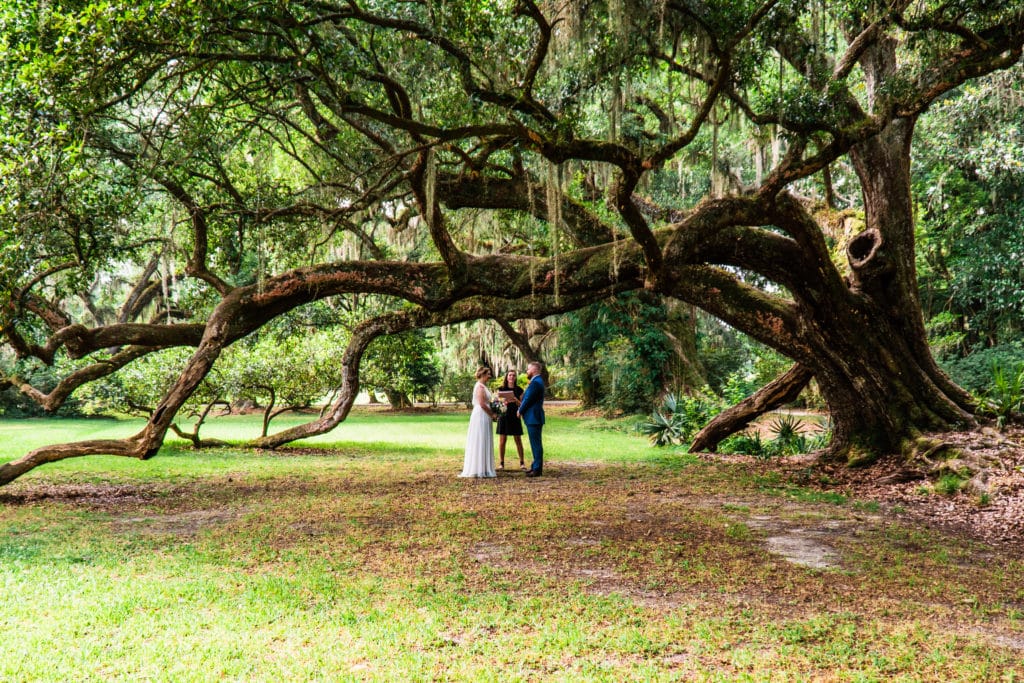
1–2 Hour Elopement Timeline — Ceremony Only
A 1–2 hour elopement timeline is the most minimal version.
It can work if you truly want a very quick ceremony and a few portraits, with little to no additional experience surrounding it.
A typical 1–2 hour elopement might include:
- arriving at the location
- a short ceremony
- a few portraits afterward
- possibly a small group photo
- leaving shortly after
This can be enough if your goal is simplicity at the most basic level.
But it usually does not leave room for much else.
No relaxed start.
No real settling in.
No meaningful exploration.
No getting-ready story.
No flexible timing.
No meal or celebration.
Very little space for the experience to unfold.
For that reason, this is not the kind of elopement experience we generally design.
It is more like a quick ceremony appointment than a full wedding-day experience.
4 Hour Elopement Timeline — Ceremony-Centered Experience
A 4-hour elopement is the shortest timeline we offer.
It is still a simple, focused experience, but it gives the day enough space to feel intentional.
This timeline usually works best when:
- it’s just the two of you
- there is one primary location
- there is little to no travel
- the ceremony is the center of the experience
- you do not need getting-ready coverage
- you are not including a full guest experience
- you want time before and after the ceremony to actually feel the place
A 4-hour elopement might include:
- meeting at a trailhead, Airbnb, or location
- walking or hiking together
- time to settle in before the ceremony
- your ceremony
- intentional time afterward
- portraits that feel connected to the experience
- a slow walk back, champagne, a picnic, or a quiet moment together
This is not a full wedding day.
But it is also not a drive-by elopement.
There is enough room for the ceremony to feel meaningful, for the place to matter, and for the experience to feel like more than a quick stop.
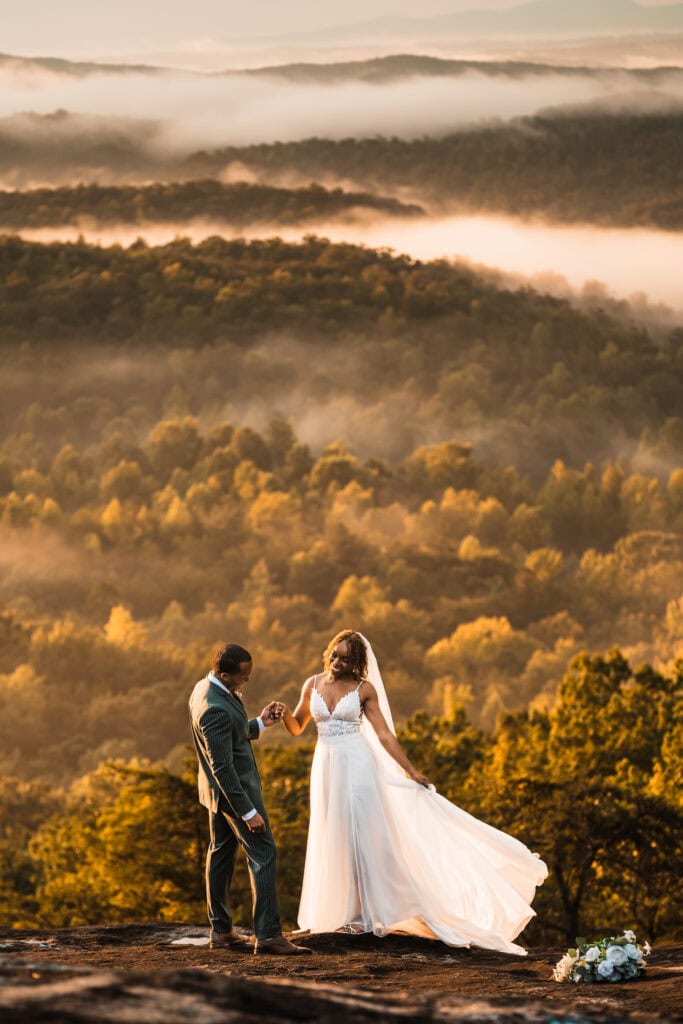
6–8 Hour Elopement Timeline — Ceremony + Adventure Experience
A 6–8 hour elopement gives the day more shape.
This is where you can start to include more of the experience without making the day feel packed.
This timeline can work well if you want:
- time at an Airbnb or cabin
- a ceremony at one location
- one additional experience or portrait location
- light travel
- a small group
- a slower pace
- some room for flexibility
A 6–8 hour elopement might include:
- a relaxed start at your Airbnb
- getting dressed or final preparation
- a first look
- travel to your ceremony location
- ceremony
- family photos or time with guests
- a second location for portraits or adventure
- a toast, picnic, or simple celebration
This is where your day begins to feel more complete.
You can start the day with more calm.
You can include a little more movement.
You can have time with guests without losing all of your private time.
You can let the ceremony be part of the day instead of the entire day.
For most, this is where you can feel the difference between “we had enough coverage” and “we actually got to experience our day.”
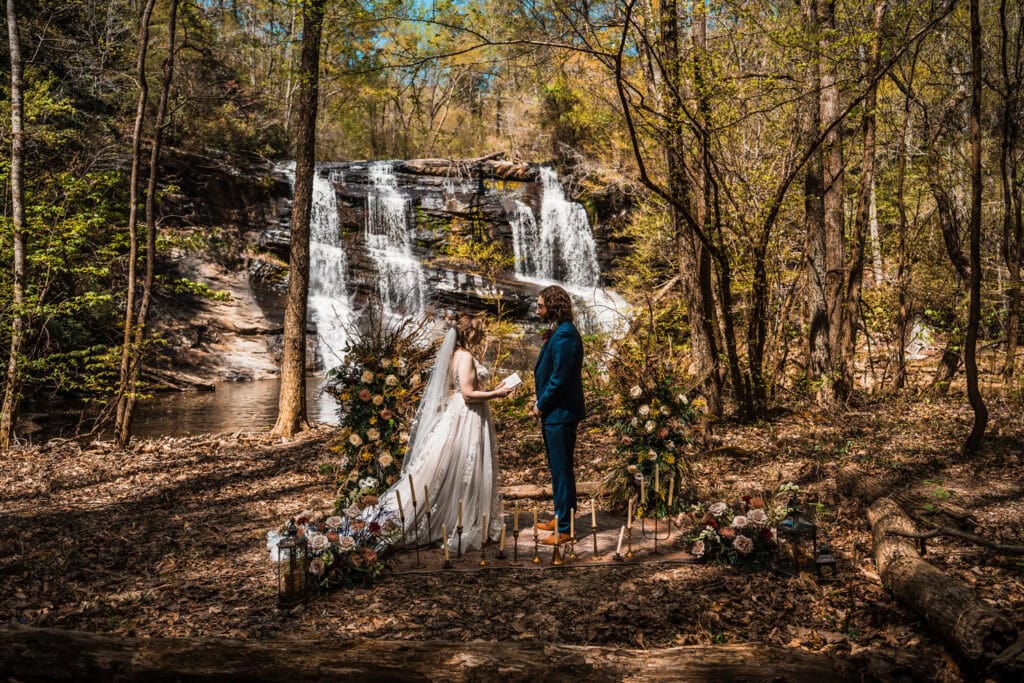
Complete-Day Elopement Timeline — 8–12 Hours
A complete-day elopement is where the experience can fully breathe.
This is the closest thing to the vacation-day idea we described earlier.
Your day has a natural rhythm:
a slow, intentional start
meaningful time together
ceremony
exploration
space to pause
time with loved ones, if they’re present
a meal or celebration
a relaxed close to the day
A complete-day elopement works well if you want:
- getting-ready coverage
- multiple locations
- guests and private time
- intentional pacing
- a meal, picnic, cake, champagne, or dinner
- time to explore
- sunset or sunrise portraits
- a full wedding-day story
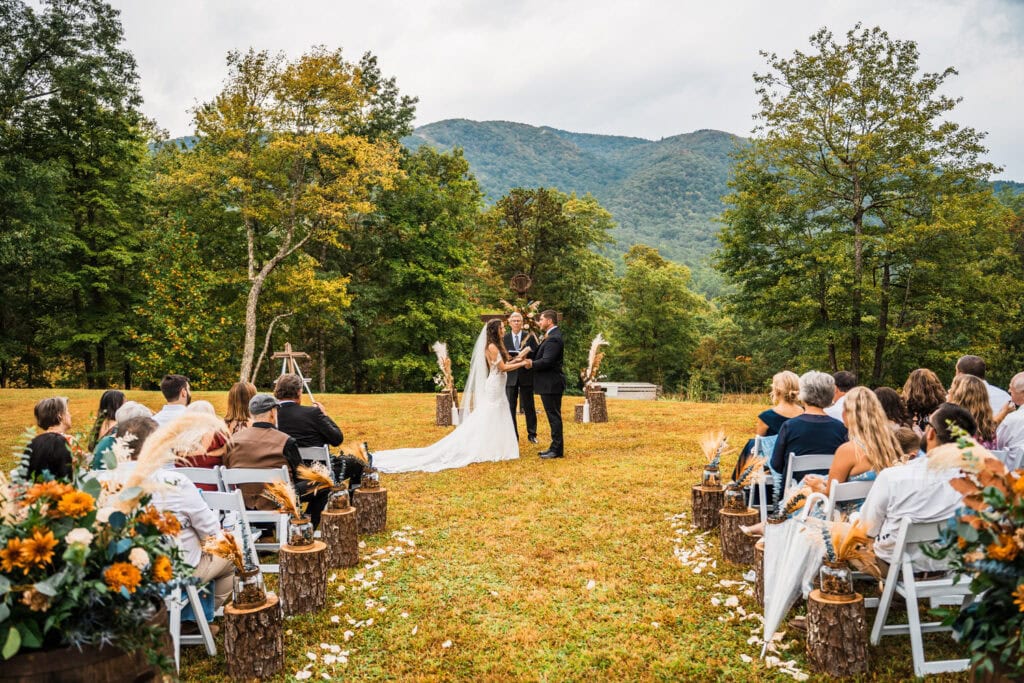
If it’s just the two of you, a complete-day timeline allows you to move slowly through the experience.
You can explore multiple locations, build in a picnic or shared experience, take your time at each place, and let the day unfold naturally.
If you have guests, this is where thoughtful design really matters.
Instead of being with guests all day, you can create a flow like:
time together in the morning
ceremony with guests
family photos and celebration
private time for just the two of you
coming back together for a meal
or ending the day with sunset portraits alone
That separation is what allows the day to feel both intimate and shared.
You do not have to choose between including your people and having a private, meaningful experience.
You just need a timeline that supports both.

Multi-Day Elopement Timeline — Space for the Full Story
Multi-day elopements are becoming more popular, not because couples need more things to do, but because they want a deeper experience.
At a practical level, a multi-day elopement gives you flexibility.
You can separate the day into different parts:
That alone removes a lot of tension.
You’re no longer trying to balance everything at once.
But the real value of a multi-day elopement goes beyond logistics.
There is something that happens the day after your wedding that most couples don’t expect.
You wake up, and everything feels different.
You are not just engaged anymore.
You are married.
There is a quiet emotional afterglow that is hard to describe until you are in it.
That’s what day two can become.
Not a repeat of the wedding day.
Not more pressure.
Not more things to perform.
But a chance to step back into the experience in a different way.
You might put your wedding attire back on.
Revisit a meaningful location.
Explore somewhere new.
Take portraits without the pressure of the ceremony day.
Spend time together without an agenda.
And what makes it powerful is this:
You are not just experiencing a place.
You are experiencing it as husband and wife.
That emotional shift changes everything.
For some couples, day one is focused on family and shared moments, while day two is private and adventurous.
For others, both days are just the two of them, but each day has a different rhythm — one more emotional, one more relaxed; one more adventurous, one more reflective.
There is no single formula.
The common thread is this:
You are not trying to fit the whole meaning of your wedding into one container.
You are giving your experience room to breathe.
A one-day elopement can be a complete experience.
A multi-day elopement is a complete experience with space to actually feel it.
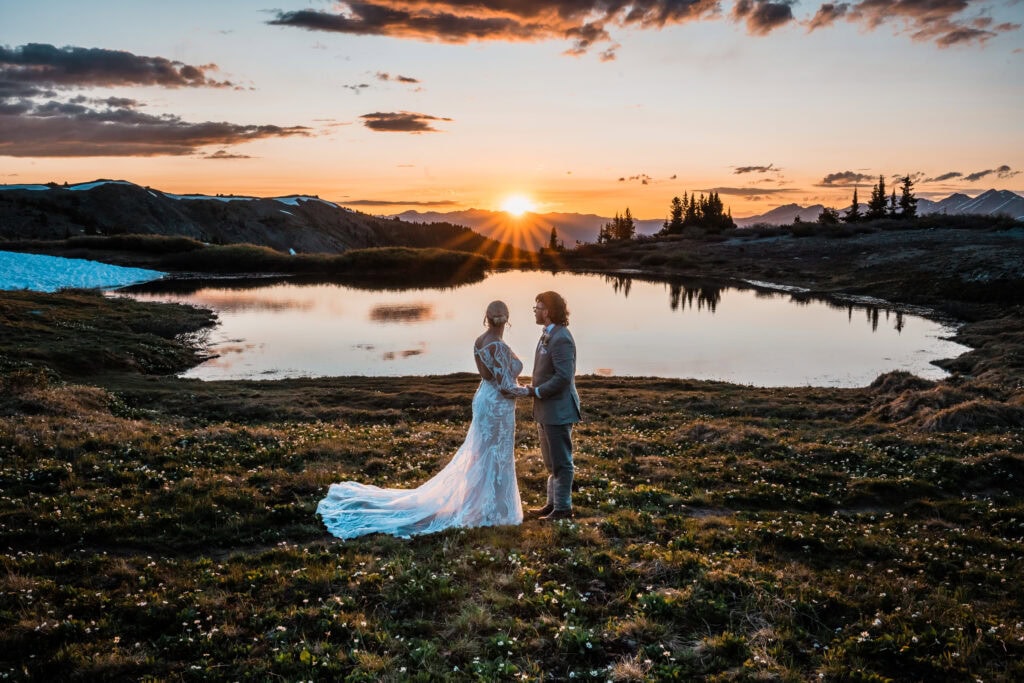
See how this unfolded in a real multi-day elopement:
Colorado Airbnb wedding and adventure elopement
A Quick Note on Getting-Ready Time
Sometimes it’s easy to think:
“We don’t need getting-ready photos.”
And that may be true.
But what we call “getting-ready time” is not just about photos of hair, makeup, shoes, or details.
It’s about everything that happens at the beginning of your wedding day:
It’s also when we:
There’s a lot happening in that window.
And in a 4-hour timeline, there isn’t space for it.
That’s why a 4-hour elopement works best when the experience is simple, ceremony-centered, and focused around one primary location.
If you want the beginning of the day to be part of the story, you’ll usually want more room in the timeline.
How to Choose the Right Amount of Time for Your Elopement
By this point, you’ve probably realized something important:
There isn’t a standard amount of time for an elopement.
And that’s where a lot of couples get stuck.
Most people try to answer the question based on:
- what they’ve seen online
- what feels normal
- what a package says
- or what they assume they need
But elopements do not work that way.
The right amount of time is not something you pick randomly upfront.
It becomes clear once you understand what your day actually involves.
Here are the biggest things that shape your timeline.
1. Your Guest Count
This is one of the biggest factors, and it’s the one couples often underestimate.
The more people you include, the more time your day will usually require.
Not because guests are a problem.
Because guests add real moments and real logistics.
Think about the difference:
just the two of you
versus
coordinating parents, siblings, friends, kids, or a small family group
With just the two of you, you can get ready, grab your things, and go.
With a group, people need guidance. Timing needs to be coordinated. Questions come up. Transportation matters. Group photos take time. Meals take time. Ceremony structure becomes more important.
Each of those pieces may be meaningful.
But they need space in the day.
If you’re still deciding who to invite, read our How Guest Count Shapes Your Elopement guide.
2. Your Vision for the Day
Once you know who is part of your day, the next question is:
What do you actually want to experience?
Do you want to hike to a private location?
Visit multiple places?
Have a relaxed morning at your Airbnb?
Include a meal or celebration?
Spend part of the day with family and part of it alone?
Watch sunrise or sunset?
Return somewhere meaningful the next day?
Each of those things takes time.
Not just to do.
To do well.
This is where couples often run into problems.
They try to fit a full, meaningful experience into a timeline that only allows for a small portion of it.
That is when things start to feel rushed.
3. Your Locations and Logistics
Where you are going and how you move between places matters more than you might expect.
Things like:
all add up.
And there is something else most people forget:
You are still human on your wedding day.
You will need:
- time to eat
- time to rest
- time to reset between moments
- time to be together without immediately moving to the next thing
Traditional weddings often ignore this.
Elopements should make space for it.
What Most Couples Get Wrong About Elopement Timing
Most couples start by asking:
“How many hours do we need?”
But the better question is:
“What do we want to experience, and how do we want it to feel?”
The hours should come after the vision.
If you start with the smallest number of hours that sounds possible, you may end up designing your wedding day around limitation.
But if you start with the experience, the timeline becomes a tool.
It supports the day.
It gives each part enough room.
It helps you avoid rushing through the very thing you chose an elopement for.
You are not trying to fill time.
You are trying to give meaningful moments enough space to happen naturally.
How We Help You Build the Right Elopement Timeline
This is exactly where most couples realize they don’t actually want to figure this out alone.
Because this is not just about choosing a number of hours.
It is about:
That’s what we help with.
We help you:
And just as importantly, we are there with you on the day itself.
Because no elopement unfolds exactly as planned.
And it shouldn’t.
The timeline is a framework.
Not a rigid schedule.
There are moments that matter: ceremony timing, permits, sunrise, sunset, travel windows.
But everything in between is where flexibility matters.
We are constantly reading the day:
So you are never thinking about time.
You are just experiencing your day.
When your elopement timeline is designed the right way, you do not walk away thinking:
“We should have had more time.”
“That felt rushed.”
“We barely got to enjoy it.”
You walk away thinking:
“That felt exactly right.”
Planning Your Elopement Timeline?
You do not need to know exactly how much time you need before reaching out.
That is part of what we help you figure out.
If you are still early in the process, start with our How to Elope guide. It will help you understand the bigger planning order before you choose a location, package, or timeline.
If you are trying to decide who to invite, read our How Guest Count Shapes Your Elopement guide.
Your elopement should not feel like a rushed appointment.
It should feel like a wedding day you actually got to live.