





One of the biggest surprises about elopements is that they can still require real lead time.
At first, it seems like eloping should be fast.
You’re not planning a traditional wedding with a ballroom, 150 guests, seating charts, formal invitations, and a giant reception.
So it’s easy to assume:
“If we’re keeping this simple, we probably don’t need that much time.”
And sometimes, that’s true.
A simple just-us elopement on a weekday can often come together much faster than a traditional wedding.
But a meaningful, custom elopement is still a wedding day.
You may still need a location that fits your vision, lodging that supports the experience, permits or permissions, an officiant, hair and makeup, florals, dinner plans, guest logistics, travel details, and a timeline that helps the day feel calm instead of rushed.
The difference is not that elopements require no planning.
The difference is that the planning is focused on what actually matters.
So the question is not only:
“How fast can we plan this?”
It is:
“How much time do we need to create the kind of experience we actually want?”
That’s what this guide will help you understand.
Quick Answer: How Far in Advance Should You Plan an Elopement?
For most custom elopements, we recommend planning 9–12 months in advance when possible.
If you want a popular season, a specific date, guests included, limited-inventory lodging, or a more complete experience, 12–18 months is ideal.
Shorter timelines can absolutely work, but they usually require more flexibility.
Here’s a simple way to think about it:
|
Planning Window |
What It Usually Means |
Best Fit |
|
12–18 months |
Maximum flexibility and the widest range of options |
Popular seasons, specific dates, guests, destination weekends, limited-inventory lodging, larger groups |
|
9–12 months |
A good planning window for most custom elopements |
Most couples, especially if you’re flexible on exact date or weekday |
|
6–9 months |
Feasible, but options may already be narrowing |
Flexible couples, weekdays, smaller guest counts |
|
3–6 months |
Possible, but compromise becomes more likely |
Just-us or very small elopements, flexible dates and locations |
|
Less than 3 months |
Limited, but not impossible |
Simple weekday elopements, off-season dates, high flexibility |
The shorter the planning window, the more flexible you’ll usually need to be.
Not because a beautiful day can’t happen quickly.
But because the best options for lodging, permits, vendors, and dates may already be taken.
Why Timing Matters for an Elopement
Elopements are simpler than traditional weddings in some ways.
But they are not automatically simple in every way.
A custom elopement often depends on several pieces lining up together:
- where the day happens
- where you stay
- who is involved
- what permission or permit is needed
- who helps support the day
- how the timeline flows
- what backup options make sense
When you have more lead time, those pieces are easier to shape intentionally.
When you have less time, you may still have options, but the day may need to be designed around what is still available.
That is not always a bad thing.
Some of our couples are very flexible, and that opens up a lot of possibilities.
But if you have a specific vision, a specific season, a specific location, or guests to consider, timing starts to matter more.
The whole point of eloping is often to create a day that feels peaceful, personal, and less stressful.
One of the best ways to protect that feeling is to give the planning enough space from the beginning.
Vendors Book up faster than you think
Even for an elopement, experienced vendors book ahead.
That includes photographers, planners, officiants, hair and makeup artists, florists, private chefs, caterers, restaurants, and sometimes musicians or rental companies.
And here’s something couples don’t always realize:
Most elopement vendors are also serving traditional weddings.
Not always, of course. Some vendors focus heavily on elopements. But in many regions, the best hair and makeup artists, florists, officiants, private chefs, caterers, and musicians are also being booked by traditional wedding couples who may be planning 12, 18, or even 24 months in advance.
So availability is not only about whether your photographer or planner is available.
It’s also about whether the rest of the team needed to support the day is still available.
This matters most if you want:
- a Saturday in a popular season
- a specific hair and makeup artist
- a florist with a particular style
- a private chef or catered dinner
- a restaurant reservation for a group
- a location that requires outside vendor coordination
- a larger intimate wedding rather than a just-us elopement
If you are flexible on the date, weekday, region, or vendor team, shorter timelines become much easier.
But if you care about quality and fit, planning earlier gives you more room to choose intentionally instead of simply choosing from whoever is left.
Lodging Can Be One of the Biggest Constraints
For elopements, lodging is not always just a place to sleep.
It can become part of the experience.
It might be where:
- you get ready
- your family gathers
- you exchange private vows
- you have dinner
- you return after portraits
- you spend the weekend together
That means lodging matters a lot.
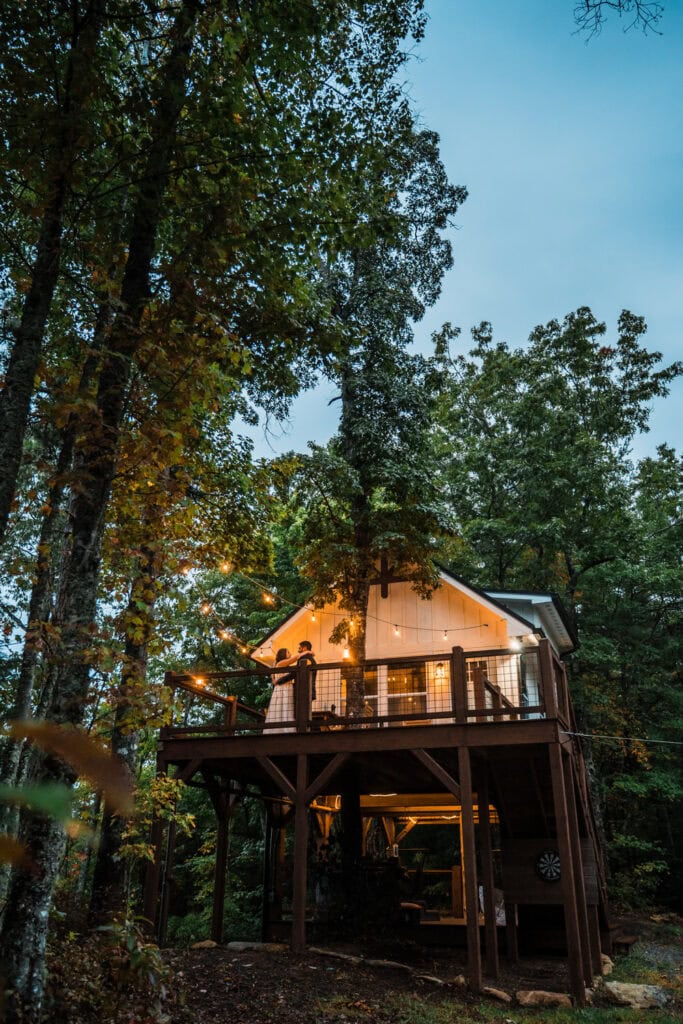
A beautiful Airbnb, cabin, inn, or private home can completely shape the feel of the day.
But the best lodging options often book early, especially in popular regions and seasons.
This is true at both ends of the spectrum.
Large properties that work well for intimate weddings or guest-inclusive elopements are limited. A home that can comfortably support 20–40 people, has enough parking, has a good layout, has a beautiful setting, and allows events or gatherings is not easy to find. When those properties exist, they can book far in advance.
But the same issue can also happen with smaller properties.
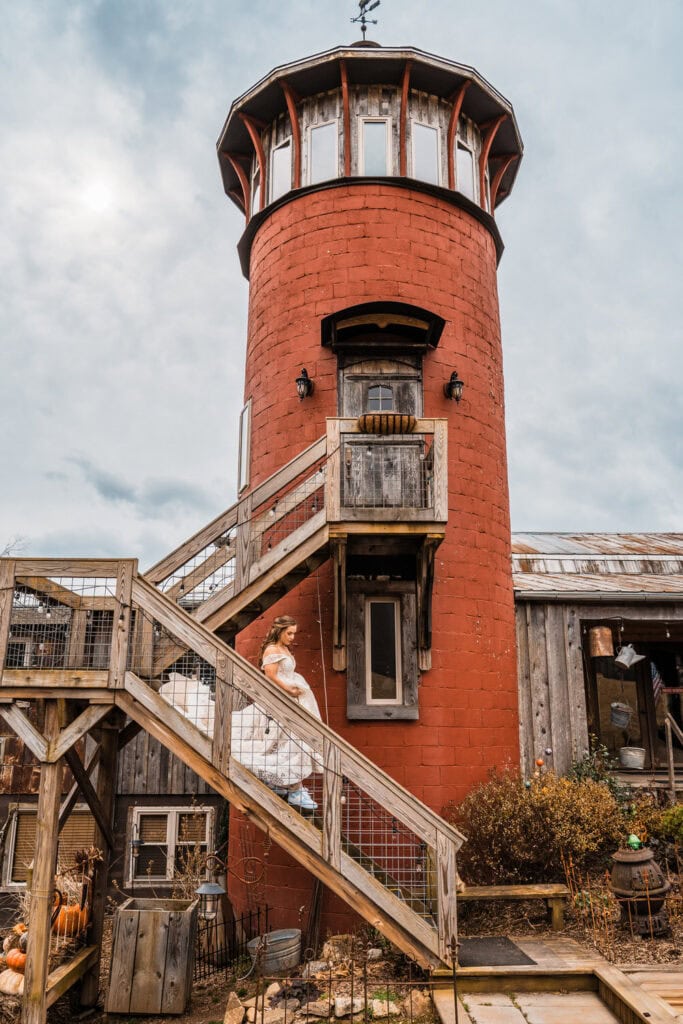
The best one-bedroom or two-person getaway places — the ones that feel private, romantic, scenic, and actually special — are also limited. Those may not be competing with large weddings, but they are still competing with anniversary trips, vacations, honeymoons, and weekend getaways.
Most markets have a lot more average three-bedroom/two-bath vacation rentals than truly special large gathering properties or truly special couples-only retreats.
That’s why lodging selection can become a pressure point faster than couples expect.
We have seen this over and over.
A couple may find the perfect general area, then realize the lodging options left do not actually support the day they imagined.
The location may be beautiful, but the rental has no privacy.
Or the view is great, but there is no usable outdoor space.
Or the house is big enough, but parking does not work.
Or the place photographs well online, but the layout is terrible for getting ready.
Or the best properties are already booked.
That is why we like to think about lodging early in the planning process.
Not after everything else is already decided.
Permits and Permissions Take Time
Many outdoor elopement locations require permits or permissions.
That might include:
- national parks
- the Blue Ridge Parkway
- state parks
- national forests
- city parks
- private gardens
- historic sites
- beaches
- Airbnbs or private rentals
Some permits may only require a few weeks.
Others may need 30, 60, or even 90 days depending on the agency, location, season, and complexity of the request.
And even when the official minimum window is short, we usually recommend starting far earlier.
Why?
Because permits are not just paperwork.
They can affect where you can stand, how many people can attend, what time of day is allowed, whether decor is permitted, whether photography is included, whether the location is already reserved, and what backup options you have.
If your whole plan depends on a specific location, you do not want the permit process to become a last-minute stressor.
Peak Seasons Fill Faster
Every region has its own version of peak season.
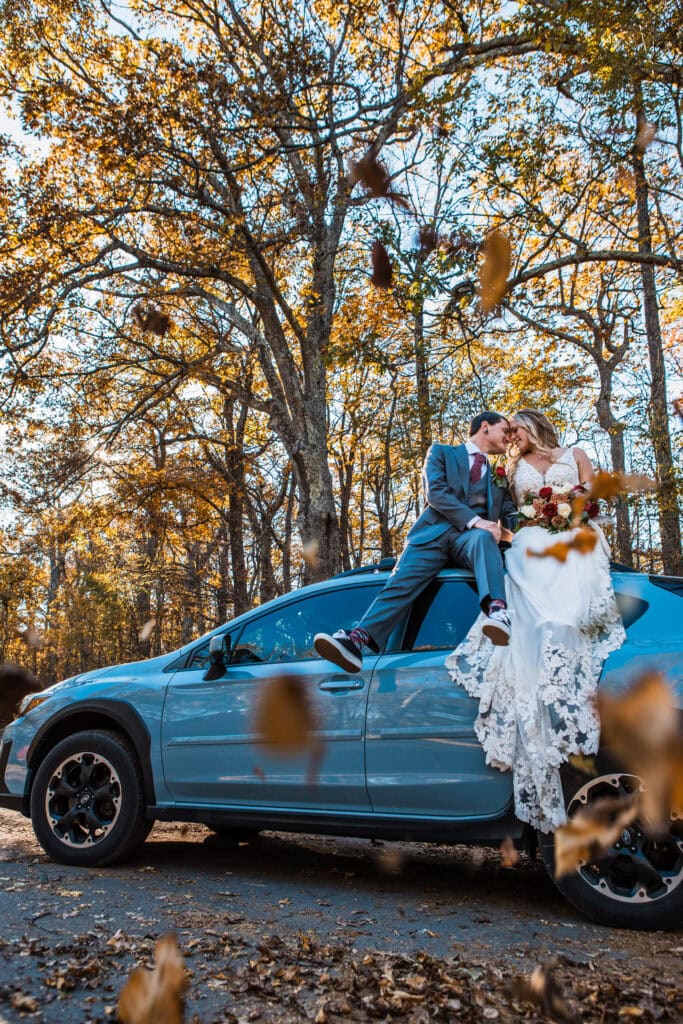
In the mountains, fall is usually the big one.
In Charleston and coastal areas, spring and fall can book quickly.
In national parks, popular weekends and mild-weather seasons can become crowded and competitive.
And in many destination areas, your wedding is not the only thing happening.
There may be festivals, college events, holiday weekends, tourist seasons, Oktoberfest weekends, spring break, fall color traffic, restaurant demand, or local events that affect lodging, traffic, parking, and vendor availability.
That does not mean you cannot plan around those seasons.
It just means your date has to be chosen with awareness.
Peak season affects almost everything:
vendor availability, lodging prices, traffic, permit options, restaurant reservations, privacy, guest travel, and backup plans.
If you want a peak-season elopement, especially with guests, we recommend planning earlier.
If you are open to weekdays, sunrise, off-season dates, or less obvious locations, you may have more flexibility.
A Note About Last-Minute Wedding Planning
We have seen more couples across the wedding industry trying to plan later and later.
We understand why it happens.
Life is expensive. Decisions feel big. Couples are busy. Sometimes family dynamics are complicated. Sometimes you just need time to figure out what you actually want.
But there is a real limit to what can be created well on a short timeline, especially if you have a firm vision, a popular date, guests, lodging needs, or multiple vendors involved.
We have helped couples pull off beautiful elopements in shorter windows.
But there is a difference between rising to the occasion and making the planning experience harder than it needs to be.
The shorter the planning window, the more pressure gets pushed onto every decision.
You have less time to compare options.
Less time to wait for permit answers.
Less time to find lodging.
Less time to coordinate vendors.
Less time for guests to make travel plans.
Less time for the whole plan to settle into place.
And sometimes, the honest answer is no.
If someone reaches out three months before a 40-person intimate wedding in a popular season, we may not be able to take it on. Not because the day is not meaningful, but because that kind of event deserves enough planning time to be done well.
A just-us weekday elopement three months from now?
That may still be very possible.
A guest-inclusive wedding weekend with lodging, dinner, vendors, permits, and a specific location?
That needs more time.
This is not about making elopement planning feel intimidating.
It is about protecting the very thing most couples want from an elopement in the first place:
a day that feels calm, thoughtful, and fully supported.
Elopement Planning Timeframes: What to Expect
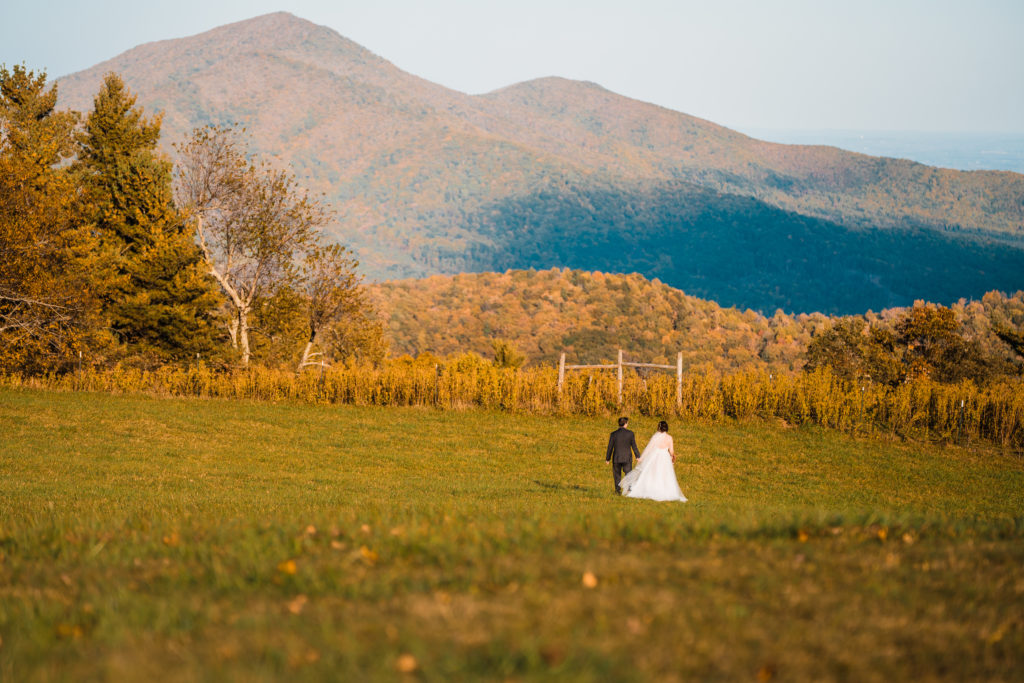
Here is a realistic way to think about different planning windows.
12–18 Months Out: Ideal for Maximum Flexibility
Planning 12–18 months in advance gives you the most room to shape the day intentionally.
This is ideal if you want:
- a specific date
- a popular season
- a Saturday or weekend
- guests included
- a destination weekend
- a specific region or location
- the best selection of lodging
- a larger private property or intimate wedding home base
- a private chef, florist, hair and makeup, or other vendors
- a more complete one-day or multi-day experience
This window gives you time to make thoughtful decisions instead of rushed ones.
You can compare regions, choose lodging carefully, apply for permits early, build a vendor team, and give guests more notice if they are traveling.
This is especially helpful if you are bringing a larger group.
Guest-inclusive elopements and intimate weddings need more than a beautiful ceremony spot. You may also need lodging, parking, bathrooms, dinner, vendor access, guest communication, transportation, and a realistic rain plan.
Those pieces can come together beautifully, but they take time.
This window also gives the day room to evolve.
That matters because many couples do not know exactly what they want at the beginning.
You may start by saying “mountains” or “waterfall” or “just us,” then realize the real vision is more specific:
a private Airbnb ceremony
family dinner
sunrise portraits
a waterfall adventure
a full weekend with your closest people
or a two-day experience with both guests and private time
More lead time gives those ideas space to become clear.
9–12 Months Out: A Good Planning Window for Most Elopements
For many couples, 9–12 months is still a good planning window.
You are not late.
But this is where some compromises may begin to show up, especially if you want a specific date, a larger group, a popular season, or a highly specific lodging style.
This window often works well if you are open to weekdays or flexible within a season.
At this stage, we would usually focus on:
- choosing the general region
- deciding whether guests are involved
- narrowing the date or season
- securing photography and planning support
- choosing lodging
- identifying the ceremony location
- starting permit conversations
- thinking through vendors and timeline shape
For many custom elopements, this window can feel very comfortable.
It gives you enough time to be intentional without making the process feel like it has to stretch forever.
But if the day involves guests, dinner, lodging, or multiple vendors, decisions need to start happening.
This is not the window where we would want to sit on the fence for months.
6–9 Months Out: Feasible With More Flexibility
Planning 6–9 months out is very possible.
This can work well if:
- your guest count is small
- you are open to weekdays
- you are not locked into one exact location
- you have flexibility with lodging
- you are not trying to book the most competitive date of the year
- you are willing to make decisions efficiently
At this stage, the main thing is to avoid losing time in indecision.
You do not need to panic.
But you do need to move.
The biggest constraints are usually lodging and vendor availability.
Permits can also become more important depending on the location.
This planning window becomes harder with larger groups because there are more pieces to align. You are not just choosing a ceremony location. You may be trying to coordinate lodging, vendor availability, guest travel, dinner plans, permits, and a timeline that works for everyone.
That can still happen.
But you need an open mind.
If you are planning 6–9 months out, the process can still feel calm, but it helps to have guidance so you are not losing weeks trying to figure out which region, location, or permit path makes sense.
3–6 Months Out: Possible, But Compromise Becomes More Likely
A 3–6 month planning window can still work.
But this is where flexibility becomes very important.
At this point, you may need to compromise on:
- exact date
- weekend vs weekday
- lodging style
- specific vendor choices
- popular locations
- guest count
- dinner plans
- permit-dependent locations
This does not mean your day will feel second-best.
It just means we may need to design the experience around what is realistically available.
A shorter planning window can work well if:
- it is just the two of you
- you are open to weekdays
- you are open to less crowded locations
- you are flexible on the exact date
- you are planning in an off-peak season
- you do not need a large vendor team
- you are comfortable making decisions quickly
In this window, we usually recommend keeping the plan focused and intentional.
Do not try to force a complicated wedding weekend into a timeline that does not have room to support it.
If the vision is flexible, 3–6 months can still be enough.
If the vision is rigid, this window can become stressful quickly.
Less Than 3 Months Out: Limited, But Not Impossible
Planning an elopement in less than 3 months is possible.
But it needs to be simple and flexible.
This is usually the best fit for:
- just-us elopements
- weekday dates
- off-season timing
- locations that do not require a complicated permit process
- couples who are flexible about lodging and vendors
- a ceremony-centered or simple adventure experience
The challenge with less than 3 months is not that a meaningful day cannot happen.
It can.
The challenge is that you may have fewer options.
The best lodging may be gone.
Some vendors may be booked.
Some permit windows may be too tight.
Restaurants or private chefs may be unavailable.
Guest travel may become harder.
So if you are planning quickly, the strategy is not to chase the perfect version of every idea.
The strategy is to create the best version of the experience that is still realistic.
That may mean a weekday, a quieter location, a simpler timeline, a smaller guest count, or a private-property ceremony instead of a high-demand public location.
And sometimes, that can be beautiful.
But the more guests, vendors, lodging needs, and fixed expectations you add, the harder this window becomes.
What Happens When You Wait Too Long?
Waiting too long usually does not make an elopement impossible.
But it does reduce your choices.
And that can change the feel of the day.
This is where couples can get surprised.
They wait because they think:
“It is just an elopement.”
“We are keeping it simple.”
“We do not need a big venue.”
“We can figure it out later.”
But then they realize the most important pieces are still time-sensitive.
The Best Lodging Gets Booked
This is often the first problem.
The Airbnb, cabin, inn, or private home you imagined may already be unavailable.
And if lodging is part of the wedding-day experience, that matters.
You may still find somewhere to stay.
But it may not have the view, privacy, layout, parking, light, or guest capacity needed for the day you wanted.
Vendor Options Get Narrower
Experienced vendors book ahead.
If you wait too long, you may still find vendors, but not necessarily the ones who best fit your vision.
For a simple elopement, that may be okay.
For a custom experience, vendor fit can make a real difference.
Permit-Dependent Locations Become Riskier
If your ceremony depends on a national park, state park, national forest, city park, or other permitted location, waiting can create real stress.
You may run into application deadlines, slow communication, limited availability, location restrictions, or uncertainty about approval.
When your entire plan depends on permission from an agency or land manager, you want that process started early.
Guest Plans Become Harder
If you are inviting family or friends, they need time too.
They may need to request time off, book flights, find lodging, arrange childcare, or plan travel around work and school.
The more people you include, the more lead time usually helps.
You May Start Hearing “No”
This is the part that is frustrating, but real.
At some point, vendors, lodging, restaurants, permit offices, and planning teams may simply no longer be available for what you are asking.
We have had to tell couples no before.
Not because we did not care about their day, but because the window was too short for the scope of what they wanted.
A simple weekday elopement may still be possible on a shorter timeline.
But a 30–40 person intimate wedding with lodging, dinner, vendor coordination, and a specific season requires more time.
Sometimes waiting too long means the answer is not:
“How do we make this exact plan happen?”
It becomes:
“What version of this can still realistically work?”
You May Start Planning From What Is Left
This is the biggest issue.
Instead of asking:
“What kind of experience do we want?”
you may end up asking:
“What is still available?”
That does not mean the day cannot be beautiful.
But it is not the same kind of planning process.
Real Constraints That Affect Your Elopement Timeline
Every elopement is different, but these are the most common real-world constraints that affect how far in advance you should plan.
Permits
Some locations require permits 30–90 days in advance.
Others may have shorter or longer windows.
Even when the official timeline is short, we recommend starting earlier when possible because communication can be slow, details can change, and permit approval can affect the rest of the plan.
Airbnb and Lodging Availability
If you want a specific kind of lodging — mountain view, event-friendly Airbnb, enough bedrooms, good natural light, guest space, privacy, pet-friendly, close to a trail or town — start early.
The more the property needs to support, the fewer options you will have.
Vendor Availability
Photography, planning support, officiants, florals, hair and makeup, private chefs, and restaurants all book ahead.
Weekends and peak seasons go first.
Guest Travel
If guests are included, give them enough time to make the trip work.
This is especially important for destination elopements, weekday weddings, mountain towns with limited lodging, or multi-day experiences.
Season and Weather
Some locations are only realistic during certain times of year.
High-elevation roads may close in winter.
Waterfalls may be better in spring.
Fall color brings crowds.
Summer storms affect afternoon timelines.
Coastal areas may have hurricane-season considerations.
The season you choose affects the kind of plan that makes sense.
When Short Elopement Planning Windows Can Work
Short planning timelines can work beautifully when the scope of the day fits the time available.
A shorter planning window is usually more realistic if:
- it is just the two of you
- you are open to weekdays
- you are planning off-season
- you are flexible on exact location
- you do not need a large vendor team
- you are not tied to a high-demand permit location
- you are willing to keep the guest count small
- lodging is simple
- you are comfortable making decisions quickly
This is where elopements have a real advantage over traditional weddings.
You do not need to book a giant venue and coordinate hundreds of moving pieces.
If the day is simple, flexible, and small, it can come together much faster.
But the key word is flexible.
A last-minute elopement works best when you are open to designing around what is available instead of forcing a very specific plan into a tight window.
How We Help You Plan at the Right Pace
You do not need to know exactly how far in advance to plan before reaching out.
That is part of what we help you figure out.
We help couples understand:
- what planning window makes sense
- which regions are realistic
- what permit timelines may affect the day
- how guest count changes the plan
- where lodging should fit
- which vendors need to be booked early
- what can wait
- what needs to happen first
- and how to shape a timeline that feels calm instead of rushed
The goal is not to make planning feel bigger than it needs to be.
The goal is to make sure the important pieces are handled early enough that the day can feel simple when it arrives.
A well-planned elopement does not feel overproduced.
It feels supported.
That is the difference.
Planning Your Elopement?
If you are still early in the process, start with our full How to Elope guide. It walks through the bigger planning order before you choose a date, location, or package.
If you are deciding who to invite, read our How Guest Count Shapes Your Elopement guide.
If you are wondering how much time the day itself needs, read our guide on How Much Time You Need for an Elopement.
And if you are thinking about using a private rental, cabin, or Airbnb, our Airbnb Wedding Venue Guide can help you understand what makes lodging actually work for a wedding day.
You do not have to have every answer before reaching out.
You just need to know what kind of experience you are hoping for.
From there, we can help you understand what timeline, location, lodging, permits, and planning pace make the most sense.