





Airbnb weddings: What most couples get wrong + How to plan it right
At first glance, it seems simple.
You find a beautiful home in the mountains.
You book it for a few nights.
You invite your closest people.
And you get married there.
No venue. No big wedding. No stress.
That’s the idea.
But what most couples quickly realize is this:
Finding the right Airbnb wedding venue is a lot harder—and a lot more important—than it seems.
We’ve talked to so many couples who have spent hours (sometimes weeks) searching through Airbnb and VRBO listings, trying to find something that might work…
only to end up feeling stuck, overwhelmed, and unsure how to actually make a decision.
Because when you’re just looking for a place to stay, it’s easy.
But when you’re trying to picture a wedding happening there… it’s a completely different lens.
Most couples tend to fall into one of two camps:
Some instinctively feel like there’s more to this than they understand—and get stuck second-guessing every option, afraid to commit to the wrong place.
Others pick a property that looks perfect online, assuming it will all come together…
only to realize later that it doesn’t actually support the experience they had in mind.
And by that point, it can be difficult—or even too late—to change course.
Because the reality is:
An Airbnb isn’t designed to be a wedding venue.
It doesn’t come with built-in flow, coordination, or structure.
And without understanding how all of those pieces fit together, it’s easy to spend months planning…
only to end up with a day that feels more complicated, more stressful, and less meaningful than you expected.
We know this firsthand.
Not just from planning and photographing over 100 elopements…
but from being Airbnb hosts ourselves—and from building a curated catalog of properties that actually work for elopements and small weddings.
And what we’ve seen over and over again is this:
Finding a beautiful Airbnb is easy.
Finding one that actually works as a wedding venue is not.
Because when you’re just booking a stay, you’re browsing.
But when you’re planning a wedding, you’re designing an experience—
and that requires a completely different lens.
The good news is:
When an Airbnb elopement is designed intentionally, it can become one of the most personal, relaxed, and meaningful ways to get married.This guide will show you how to plan an Airbnb wedding that actually works—and what most couples don’t realize until it’s too late.
How to Plan an Airbnb Wedding (Quick Overview)
If you’re just getting started, here’s a simple breakdown of how to elope or get married at an Airbnb:
- Decide what kind of experience you want
Think beyond just the ceremony. What kind of setting, privacy, and overall environment will actually support how you want the day to feel? If you’re having guests, what kind of experience do you want for them? What do you want for yourselves? - Set your guest count, budget, and planning window
These shape what’s realistically possible: from the type of property you’ll need to how the day can unfold.
Your planning window is especially important, as the best Airbnb properties are often booked well in advance (sometimes a year or more) particularly for peak seasons and weekends. - Choose a property that supports both your vision and the logistics
It’s not just about finding a beautiful home. The property needs to function like a venue; supporting your guest count, layout, privacy, parking, and the overall flow of your day. - Secure host permission, vendors, and lodging logistics
From vendor access to local regulations, these behind-the-scenes pieces are what make the day actually work. - Create a timeline that allows space—not pressure
Instead of forcing everything into a schedule, build a day that flows naturally within the space you’ve chosen. - Show up and experience the day fully
When everything is designed intentionally, you’re free to be present instead of managing moving parts.
You can absolutely work through this process on your own.
And many couples try to.
But what most don’t realize … until they’re deep into it … is that Airbnb weddings aren’t just about finding a place…
It’s about knowing how to evaluate, design, and plan around a space that was never built for a wedding in the first place.
That’s where experience changes everything.
Planning in a specific state? Check out our shopping guides.
We’ve built location-specific guides with curated Airbnb wedding venues that actually work—not just look good online.
- Airbnb Wedding Venues in North Carolina
- Airbnb Wedding Venues in South Carolina
- Airbnb Wedding Venues in Georgia
- Airbnb Wedding Venues in Tennessee
- Airbnb Wedding Venues in Virginia
- Airbnb Wedding Venues in Florida
The Biggest Misconception: Airbnbs are not like Traditional Wedding Venues
The single biggest mistake couples make when planning an Airbnb wedding is assuming it works like a traditional venue.
It doesn’t.
And most couples don’t realize they’re making this assumption … because it’s based on how weddings are normally experienced.
In a traditional wedding, the venue is the foundation.
Once you book it, everything else falls into place:
- there’s a natural flow to the day
- vendors know how the space works
- timelines follow a familiar structure
- someone is usually helping coordinate everything behind the scenes
And most importantly, venues are intentionally designed for that flow.
They’re built around the assumption of how a wedding day works; with separate spaces for different parts of the experience:
- getting ready areas (like a bridal suite and groom’s space)
- a dedicated ceremony location
- a reception space designed for gathering and dining
- and dedicated spaces for all the support staff needed to run the event
Everything is set up to support a wedding from the start.
There’s an invisible system holding the day together.
With an Airbnb, none of that exists.
Airbnbs are designed for lodging, not for weddings.
They’re built for people to stay, relax, and experience a space … not to host a multi-part event with moving pieces, vendors, and a timeline.
What an Airbnb does NOT provide:
- No coordinator managing the flow of the day
- No built-in vendor network or recommendations
- No predefined timeline or structure
- No infrastructure designed specifically for events
You’re not stepping into a system that’s already built.
You’re starting from scratch.
And that’s the shift most couples don’t see coming.
Because an Airbnb that works well for a wedding isn’t common; it’s the result of choosing the right property with the right layout, space, and flow.
When that’s done well, the experience can be incredible.
But without that perspective, it’s easy to choose a place that looks perfect… and doesn’t actually work once the day begins.
What an Airbnb Actually Is (And Isn’t)
At its core, an Airbnb is a blank slate.
And that’s what makes it so appealing.
You’re not tied to a rigid schedule.
You’re not confined to a single type of experience.
You’re not forced into a traditional wedding structure.
But that flexibility comes with responsibility.
What an Airbnb gives you:
- Freedom to design your day
- Privacy and personalization
- A place that feels like home
What it doesn’t give you:
- Guidance on how the day should flow
- Support for coordinating vendors
- Built-in solutions for logistics
It’s not a traditional wedding venue.
It’s a space.
And how that space functions depends entirely on how it’s chosen and how the day is designed around it.
How to Choose the Right Airbnb for Your Elopement
A. Guest Count Compatibility
This goes far beyond how many people the house sleeps.
And this is where a lot of Airbnb weddings go wrong.
Airbnbs are designed to maximize sleeping capacity, not to host events.
That often means:
- bunk beds added to bonus rooms
- pull-out couches in living areas
- extra beds placed anywhere they can fit
So while a listing might say it sleeps 12… that doesn’t mean it functions well with 12 people in it.
For a wedding day, you actually need less density, not more.
A good rule of thumb:
- No one should be sleeping in shared living spaces
- Leave at least one bedroom completely unused
- Ideally, leave two bedrooms open… one for each partner getting ready
And if possible, the best room in the house (with the best light and design) should remain untouched for photos.
Because if every space is filled with people and belongings, there’s no room left for the experience itself.
B. Layout and Flow (One of the Most Overlooked Factors)
This is where Airbnbs often fail as wedding venues.
Homes are designed for living, not for a wedding day with multiple moving parts.
That means the layout has to be evaluated intentionally.
- Is there space to get ready separately?
- Are there private areas where you won’t constantly run into each other?
- Do key spaces connect in a way that allows the day to flow naturally?
Details matter here:
- Are there ensuite bathrooms, or are people sharing one hallway bath?
- Are rooms spaced out enough to create real separation?
Without the right layout, even a beautiful home can create friction from start to finish.
C. Outdoor Space, Privacy, and Surroundings
If you’re planning to use the property for your ceremony or time together, the outdoor space needs to do more than just look good in photos.
- Is there a clear, usable ceremony location?
- Is the space actually private, or are there neighbors nearby?
- Is the home on acreage, or part of a dense vacation rental area?
- What’s the surrounding environment like? Quiet and secluded, or busy and active?
These factors have a huge impact on how the day feels.
There’s a big difference between a home tucked away on private land… and one surrounded by other rentals, where people are coming and going throughout the day.
And just like the interior, photos can be misleading.
Airbnb listings are often shot with wide-angle lenses that make spaces look much larger than they actually are.
A deck that looks spacious online might only be a few feet deep in reality.
A yard that seems open might not actually accommodate a group.
And by the time you realize that… you’re already there.
D. Accessibility (For You and Your Guests)
What feels manageable for you may not be for everyone else.
- How difficult is it to access the property?
- Are there steep driveways, stairs, or multiple levels?
- Is the home built into a mountainside with limited mobility access?
Many mountain homes are designed with elevation in mind; which can mean multiple floors, long staircases, and challenging access.
These details matter more than couples expect… especially when guests are involved.
E. Parking and Logistics
This is one of the most common points of failure, and something most couples don’t think about until it’s too late.
Airbnbs notoriously under-deliver on parking relative to their stated occupancy.
- How many cars can realistically fit on-site?
- Is there overflow parking nearby?
- Can vendors access the property easily?
Now layer in what a wedding day actually requires:
- catering teams (often arriving in vans or multiple vehicles)
- hair and makeup artists
- officiant
- photography + video team
- rental deliveries (tables, chairs, etc.)
Suddenly, a driveway that barely fits guest cars becomes a major limitation.
And in many mountain locations, tight roads, steep driveways, and limited turnaround space make this even more challenging.
If access and parking don’t work, everything else becomes harder… and sometimes, impossible.
F. Host Expectations and Restrictions
Even if a property is labeled “event-friendly,” that doesn’t mean it’s ready to support an Airbnb wedding.
There’s often a lot of fine print.
- Limits on total guest count
- Restrictions on how long non-overnight guests can stay
- Rules around vendors or deliveries
- HOA restrictions on noise, parking, or gatherings
- Even limitations on commercial photography
And every host is different.
Some are flexible. Others are very strict.
There’s a big difference between a host allowing an event… and a property actually being suited for one.
The Bottom Line
If an Airbnb doesn’t work in even one of these areas, it can create ripple effects throughout your entire day.
And the challenge is: most of these things aren’t obvious when you’re just scrolling through listings.
Because these listings are designed to attract people looking for a place to stay… not a place to get married.
That means you have to read between the lines.
You have to evaluate the space through a completely different perspective.
And without experience, it’s easy to miss the details that matter most.
Now that you know what to look for, explore real Airbnb wedding venues by location:
We’ve built location-specific guides with curated Airbnb wedding venues that actually work—not just look good online.
- Airbnb Wedding Venues in North Carolina
- Airbnb Wedding Venues in South Carolina
- Airbnb Wedding Venues in Georgia
- Airbnb Wedding Venues in Tennessee
- Airbnb Wedding Venues in Virginia
- Airbnb Wedding Venues in Florida
What Most Couples Miss About Airbnb Weddings
Even when couples feel like they’ve found the perfect property—even one that’s hosted weddings before—there are still a few key things that almost always get overlooked.
And these are usually the same points where things start to unravel later.
“Events allowed” doesn’t mean wedding-ready
Some listings say they allow events.
That doesn’t mean they’re designed to support one.
There’s a big difference between permission… and practicality.
And even if a property has hosted a wedding before, that doesn’t mean it will work for yours.
That wedding worked for a specific couple—with their guest count, their vision, and their way of using the space.
Your day is different.
What feels like a proven option can quickly become a mismatch when your needs don’t align with how the property actually functions.
You’re responsible for planning and coordination
There’s no venue team behind the scenes.
No one managing timelines.
No one coordinating vendors.
No one making sure everything flows from one part of the day to the next.
You’re responsible for all of it.
And this is where many couples underestimate what’s involved.
Because it’s easy to carry over assumptions from traditional weddings; where once you book a venue, things feel like they naturally start to fall into place.
But even in traditional weddings, that only works because there’s usually a planner, a coordinator, and a venue team helping hold everything together.
At an Airbnb, none of that exists.
You’re not stepping into a system—you’re building one.
What you need to know about hiring a planner and coordinator
This is where things can get a little confusing.
Hiring a planner or coordinator can absolutely be helpful in the right setting.
But most traditional wedding planners and coordinators are used to working with venues.
They’re used to:
- established layouts
- built-in timelines
- vendor systems that are already in place
- a structure that supports the flow of the day
When you’re creating your own airbnb wedding, those systems don’t exist.
The environment is completely different.
Instead of stepping into a structured space, you’re working from a blank slate; where the flow, layout, and logistics all have to be created from scratch.
And that requires a different approach.
It’s not just about coordinating a day that already has structure.
It’s about designing one that works in the first place.
Vendor coordination becomes your responsibility
At a traditional venue, vendors already know how everything works.
There are designated areas for setup.
There’s a flow for arrivals and breakdown.
There’s a system everyone is working within.
When using an Airbnb as a wedding venue, you have to create that system yourself.
- Where do vendors set up?
- When do they arrive?
- How do they access the property?
- Where do they park and unload?
And if these things aren’t planned ahead of time, they don’t just work themselves out.
They pull you into the logistics on the day.
We’ve seen couples end up in the driveway directing vendors, answering questions, and managing moving pieces… when they should be getting ready, relaxing, and actually experiencing their wedding day.
It doesn’t function like a wedding venue (even if it looks like one)
This is one of the most common assumptions.
You find a property with a beautiful backyard, a great view, and plenty of space… and it looks like it should work.
But without intentional design, it doesn’t.
There’s no built-in structure.
No natural transitions between parts of the day.
No defined flow for how everything comes together.
It’s just a house.
And unless a plan is created around it, you’re left trying to fit a wedding into a space that was never designed for one.
The day doesn’t organize itself
Without a clear structure, things can start to feel scattered quickly.
You’re balancing:
- people staying in the home
- people arriving for the day
- vendors coming and going
- multiple parts of the experience happening in one space
And without intentional planning, it all starts to overlap.
Timelines get compressed.
Moments feel rushed.
People aren’t sure where to be or what’s happening next.
And this is where Airbnb weddings don’t just “quietly fall apart”—they become stressful in real time.
Not because the idea was wrong…
But because the plan didn’t fully support the experience.
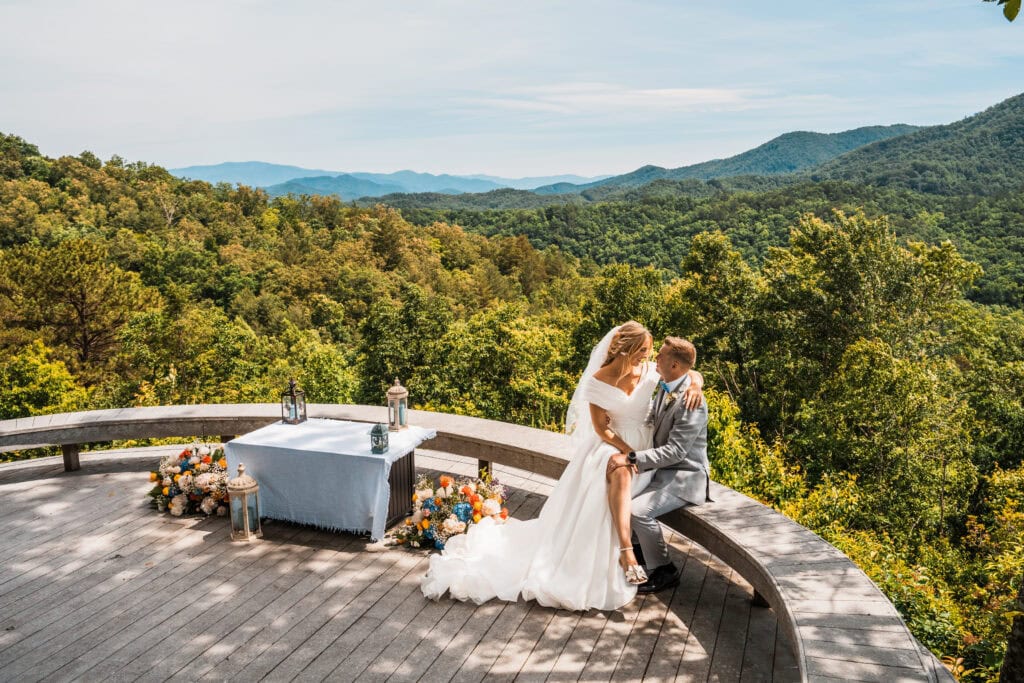
“StoryBright created the most perfect, personalized elopement day for us. From dreaming it up to bringing it fully to life, we felt supported every step of the way.”
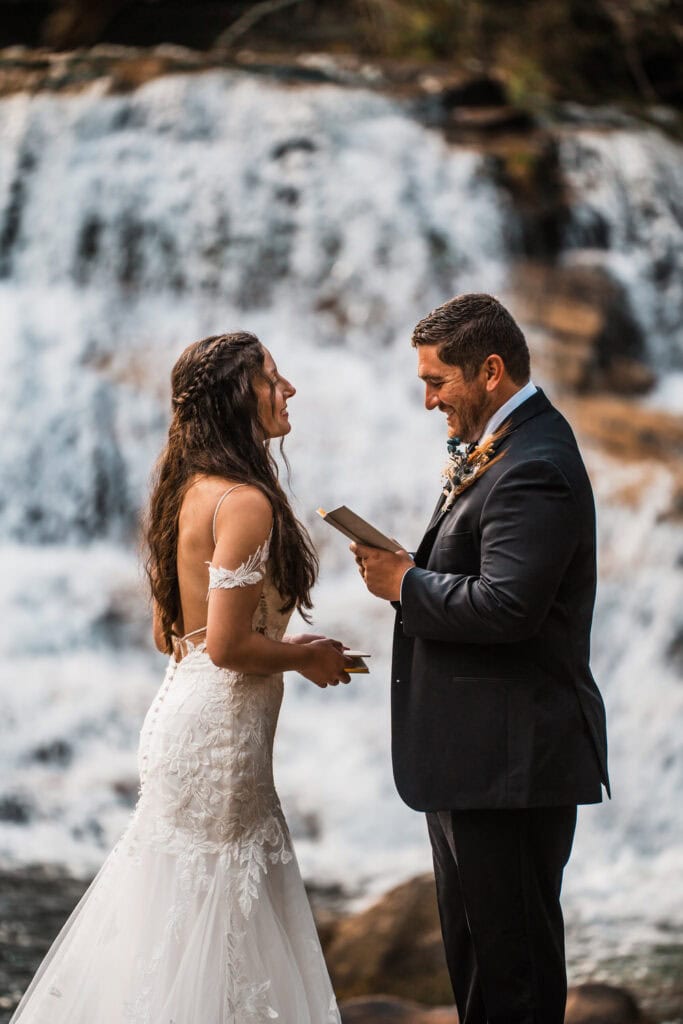
Kasey & Thomas’ day is a great example of how we help couples shape a meaningful experience around the perfect Airbnb.
You don’t have to carry all of this alone

Mark & Carolyn here! We design thoughtfully planned Airbnb elopement experiences so couples can stay present, supported, and deeply connected… not stuck managing details.
How Much Does an Airbnb Wedding Actually Cost?
One of the biggest reasons couples consider an Airbnb wedding venue is to save money.
They see it as a kind of “venue hack.”
Instead of paying $10,000–$15,000 (or more) for a traditional venue, the thinking is:
“We’ll just rent a beautiful home for a fraction of that, and have our wedding there.”
And on the surface, that makes sense.
But what most couples don’t realize is this:
An Airbnb doesn’t replace a venue—it replaces only the space.
Everything else still has to be built.
What you’re not paying for
- Traditional venue fees
- Some bundled packages (tables, chairs, coordination, etc.)
That’s where the perceived savings come from.
What you’re now responsible for
Instead of having those elements included, you’re sourcing them individually:
- the property itself (often larger and more expensive than expected)
- catering or a private chef
- rentals (tables, chairs, dinnerware, tents if needed)
- planning, coordination, and logistics
You’re essentially building a small venue from scratch—just for your day.
The biggest cost driver: your guest count
This is where everything changes.
For smaller groups (especially around 15 people or fewer) Airbnb weddings can be both cost-effective and incredibly meaningful.
You’re not paying for infrastructure designed for 150+ guests.
You’re creating something intimate, personal, and tailored.
But once you move beyond that range, the equation shifts quickly.
Because now you’re not just hosting a small gathering, you’re supporting a full event.
That’s where costs begin to stack:
- larger homes to accommodate more people
- additional space for gathering and dining
- increased food and beverage costs
- more complex logistics to keep everything running smoothly
And this is where many couples unintentionally cross a threshold.
The tipping point most couples don’t see
Around the 20–30 guest range, things often start to change.
What began as:
“We’ll rent a house and get married there”
Turns into:
“We need to make this space function like a wedding venue.”
That can mean:
- renting a tent for weather backup
- bringing in additional tables, chairs, and setup
- managing comfort for a larger group outdoors
- creating infrastructure the property doesn’t naturally provide
In some cases, couples even need to consider:
- restroom trailers
- generators
- additional utilities depending on the location
At that point, you’re no longer just using an Airbnb—you’re building a venue on top of it.
And that’s where costs can exceed what a traditional venue might have been.
The hidden costs most people don’t plan for
There are also smaller (but important) factors that add up:
- event fees charged by hosts for exceeding standard occupancy
- limits on guest counts or additional charges per person
- vendor logistics and delivery charges
- the cost of feeding each additional guest
And like any wedding, food alone becomes a major part of the budget as your guest count grows.
A realistic way to think about budget
For couples wanting a well-designed, intentional Airbnb wedding experience:
- Around 15 guests: ~$15,000 total budget is a realistic starting point
- Each additional guest: costs tend to increase meaningfully per person
This can vary depending on your priorities, vendors, and level of experience—but it’s a helpful baseline.
And for context, we’ve seen couples spend that much even on a “just us” elopement when the experience is highly customized.
So is getting married at an Airbnb cheaper?
Sometimes.
But that’s not really the point.
An Airbnb wedding isn’t about saving the most money.
It’s about having the flexibility to create something that’s:
- more personal
- more intentional
- more reflective of your relationship
For smaller groups, it can absolutely be both meaningful and cost-efficient.
But as guest count and expectations grow, so does the complexity—and the cost.
The takeaway
Airbnb weddings don’t eliminate costs.
They redistribute them.
And the more intentional your experience becomes, the more important it is to understand how those costs actually work.
Because when expectations don’t match reality, this is one of the first places couples start to feel the pressure.

How to Plan an Airbnb Wedding That Actually Works
Once you understand how Airbnb weddings actually function, the process becomes much clearer.
The key is starting in the right place, and building each decision on top of the one before it.
Because when couples get these steps out of order, that’s when things start to feel overwhelming… or fall apart.
And part of the challenge is this:
Most couples don’t even know what questions they should be asking yet.
They know they want something meaningful.
They know they want a beautiful place.
But they haven’t been shown how to think about the experience as a whole.
And this is where there’s a gap in the industry.
There are plenty of photographers.
There are planners who work within traditional venues.
But very few people specialize in designing Airbnb weddings from the ground up—where the property, the logistics, and the experience all have to be aligned from the start.
As both Airbnb hosts and a team that has planned and photographed over 100 elopements, this is exactly the space we operate in.
So whether you’re navigating this on your own or looking for guidance, here’s the process that actually works:
Step 1: Start with designing your experience
Before anything else, define what you want your day to feel like.
Not just where it is, but the “why” behind every decision you’ll be making.
And this is where most couples need more clarity than they expect.
Because the real questions aren’t always obvious at first:
- Do you want a quiet, private experience, or something shared with others?
- How much time do you want alone vs with your guests?
- Will you get ready together or separately?
- Do you want a first look, or to see each other at the ceremony?
- Are you imagining a relaxed morning, an afternoon ceremony, or something centered around golden hour?
- Do you want a dinner gathering, a reception, or something more low-key?
- Do you want a vacation-like atmosphere, something outdoorsy, or a more elevated, formal feel?
And even beyond the wedding day itself:
- What do you want the overall experience to feel like for you and your guests?
- Is this a one-day event—or a multi-day gathering where people are staying together?
This is the foundation for everything that follows.
Because until you define the experience, every other decision is guesswork.
Step 2: Define your guest count and real constraints
Once you understand the experience you’re trying to create, you can start to define what’s actually realistic.
- How many people are truly essential to have there?
- Who are your must-have guests vs nice-to-have?
- What’s your planning window?
- What are your budget expectations?
Guest count is especially important.
Every additional person affects:
- your budget
- your property options
- your logistics
- and the overall feel of your day
And unlike traditional weddings, where adding guests scales within an existing structure…
At an Airbnb, it changes the entire structure.
Your planning window matters
- Do you have a year or more to plan and secure top properties?
- Or are you working within a few months, where availability becomes a major constraint?
And with budget—this isn’t about picking a number and expecting everything to fit inside it.
It’s about understanding what the experience you want actually costs… and making decisions from there.
Step 3: Narrow down to Airbnb wedding locations that actually work
Now—and only now—you choose the Airbnb.
Not based on what looks best online…
But based on whether it supports:
- your guest count
- your experience
- your logistics
- and the flow of your day
This includes things most couples don’t initially think about:
- Is it close to a town with vendors and services—or completely remote?
- Does it have reliable internet and cell service?
- Is it in a private setting—or surrounded by other vacation rentals?
- Will vendors realistically be able to access the property?
This is where most couples make decisions too early—and end up having to work around the wrong space.
Step 4: Design the day around the space
Once you have the right property, you can begin shaping how the day actually unfolds.
And this is where Airbnb weddings either come together… or start to feel chaotic.
Because you’re not just planning a ceremony—you’re designing an experience across a space that’s being used in multiple ways at once.
You have to think through:
- What’s happening in the morning while people are getting ready?
- How do you create space for both preparation and privacy?
- Where are guests during different parts of the day?
- What happens while you’re taking photos?
- How does the day flow from one moment to the next?
Even simple assumptions can cause problems:
- Getting ready always takes longer than expected
- Shared spaces get crowded quickly
- Guests need direction and structure
And beyond the wedding day itself:
- When are you checking in?
- How many days do you need for setup and breakdown?
Trying to fit everything into a short stay—like arriving the night before and leaving the next morning—is one of the fastest ways to create unnecessary stress.
The more space you give the experience, the better it flows.
Step 5: Bring in the right support (early)
This is where everything starts to come together.
Because at this point, you’re not just planning a wedding—you’re designing and coordinating a multi-part experience in a space that wasn’t built for one.
And this is where having the right support early makes a huge difference.
Not just someone to coordinate the day…
But someone who understands how to:
- design the experience
- evaluate properties
- anticipate logistical challenges
- and build a plan that actually works
So that by the time your wedding day arrives, you’re not managing moving pieces…
You’re simply experiencing it.
The difference is in both the order—and the execution
It’s not just about following these steps.
It’s about understanding what to do within each of them.
Because this process isn’t perfectly linear.
There’s a constant balance between:
- the big picture vision
- and the small details that make it work
When it’s done well, everything aligns.
When it’s not, couples often find themselves:
- backtracking on decisions
- working around limitations
- or realizing too late that something doesn’t fit
And that’s where the stress comes in.
Not because Airbnb weddings don’t work…
But because they require a level of intentional design that most couples aren’t aware of when they first start.
A Real Example: What A Real Airbnb Wedding Looks Like in Practice
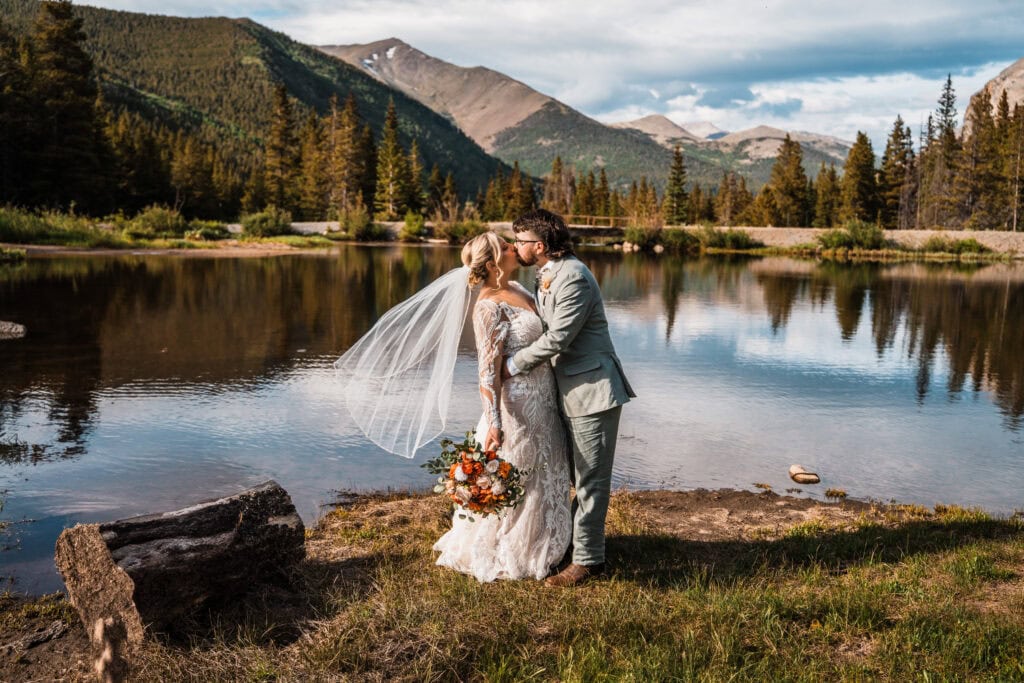
To give you a clearer picture of how this all comes together, here’s a real example from one of our Airbnb elopements, in Colorado.
This wasn’t just a single-day event.
It was a fully designed, two-day experience built around a private Airbnb in the Colorado mountains.
The starting point
Like most of our couples, they came in with a general vision:
- a beautiful place in the mountains
- something intimate and meaningful
- time together that didn’t feel rushed
But they didn’t yet know how all the pieces could come together.
The design
Instead of building a day packed with everything in it, we designed the experience across two days.

Day one centered around the Airbnb:
- getting ready at the property
- a lakeside ceremony just steps away
- time together with family in a relaxed, private setting
- an evening that felt more like a meaningful gathering than a traditional reception

Day two created space for just the two of them:
- exploring alpine locations
- slowing down and being fully present
- experiencing the landscape without the constraints of a group
Why this worked
This is exactly what we’ve been talking about throughout this guide.
- The property supported the entire experience, not just the ceremony
- The timeline created space instead of pressure
- The guest experience and private moments were intentionally separated
- Every part of the plan worked together instead of competing with each other
Nothing felt rushed.
Nothing felt forced.
The result
Instead of trying to fit everything into one day…
They had space to actually experience it.
Time with family that felt meaningful.
Time alone that felt completely their own.
And a setting that supported both—without compromise.
If you want to see how this full experience unfolded, you can explore the full story here:
Colorado Airbnb Wedding Adventure Elopement
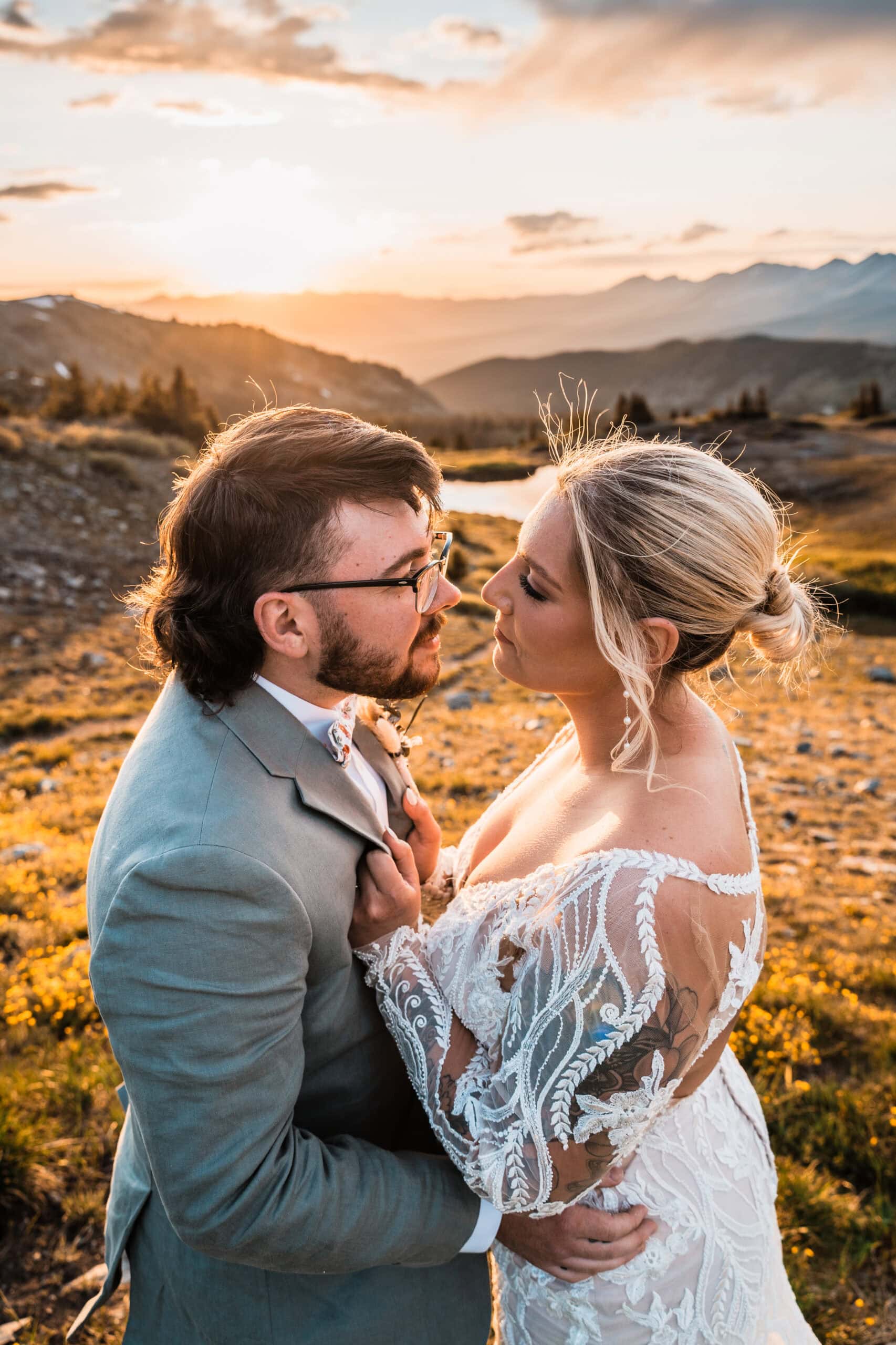
Related post:
Colorado Airbnb Elopement & Adventure
Check out our post here for how we created their day :
When an Airbnb Wedding is NOT the Right Fit
Airbnb weddings can be an incredible opportunity.
They allow you to create a meaningful, personalized experience, with access to some of the most unique and beautiful spaces available.
But they’re not the right fit for every couple.
And understanding that upfront can save you a lot of time, money, and frustration.
Because the goal isn’t just to make an Airbnb work.
It’s to create an experience that actually fits what you want.
An Airbnb wedding may not be the right fit if:
You’re planning a larger guest count
This model works best for smaller, intentional groups.
- “Just us” and up to ~15 guests → ideal
- 15–25 guests → still very doable, but requires more planning
- 25–40 guests → significantly more complex
- 40+ guests → typically better suited for a venue
As guest count increases, so does:
- cost
- logistical complexity
- need for rentals and backup plans
- and the level of coordination required
By the time you reach 25-40 guests, you’re no longer just using a home.
You’re building a venue on top of it.
And while we do design experiences up to 40 guests at the right properties…
That only works because those locations are specifically suited for it, and the planning complexity is handled intentionally.
Beyond that, most couples are better served by a venue with built-in infrastructure.
You want a fully hands-off, prepackaged experience
If what you’re really looking for is something simple, streamlined, and all-inclusive…
An Airbnb wedding is probably not the best fit.
Because Airbnb weddings are not prepackaged.
They’re not cookie-cutter.
They require decisions, design, and coordination.
And while that’s what makes them so meaningful…
It also means they’re not the easiest or most hands-off option.
For some couples, a small venue with an all-inclusive elopement or micro-wedding package is actually a better fit:
- everything is already set up
- vendors are coordinated
- the flow is built in
- and you can simply show up and experience it
There’s nothing wrong with that, it’s just a different kind of experience.
You’re looking for the absolute lowest-cost option
This is one of the biggest misconceptions.
Airbnb weddings are often seen as a budget-friendly alternative.
But in reality, they’re rarely the cheapest option.
Because you don’t benefit from the economies of scale that venues and all-inclusive providers have.
Instead, you’re building everything individually.
If your priority is to keep costs as low as possible…
You’re usually better off with a prepackaged elopement or micro-wedding option where:
- pricing is streamlined
- logistics are simplified
- and everything is designed for efficiency
Airbnb weddings are about flexibility and experience, not minimum cost.
You’re expecting a traditional wedding flow without added support
This is one of the most common mismatches.
If you’re picturing a day that naturally unfolds like a traditional wedding, just in a different setting…
That structure doesn’t exist at an Airbnb.
There’s no built-in flow.
Everything—from timeline to logistics to movement throughout the day—has to be created intentionally.
Without that, things can feel:
- disorganized
- rushed
- or unnecessarily stressful
You’re trying to make a space work instead of choosing the right one
Sometimes couples fall in love with a property and try to build their entire day around it.
Even when it doesn’t fully support their needs.
This is where compromises start stacking up:
- guest experience
- logistics
- privacy
- overall flow
And instead of the space supporting the experience…
The experience gets forced into the space.
A better way to think about it
Instead of asking:
“Can we make an Airbnb wedding work?”
A better question is:
“What kind of experience do we actually want—and what setting supports that best?”
Because sometimes, that is an Airbnb.
And sometimes, it’s:
- a small wedding venue
- a property designed for events
- or a hybrid space that blends both
The takeaway
The best choice isn’t about what sounds good in theory.
It’s about what actually supports the experience you want to create.
And when those two things align…
Everything else becomes a lot easier.
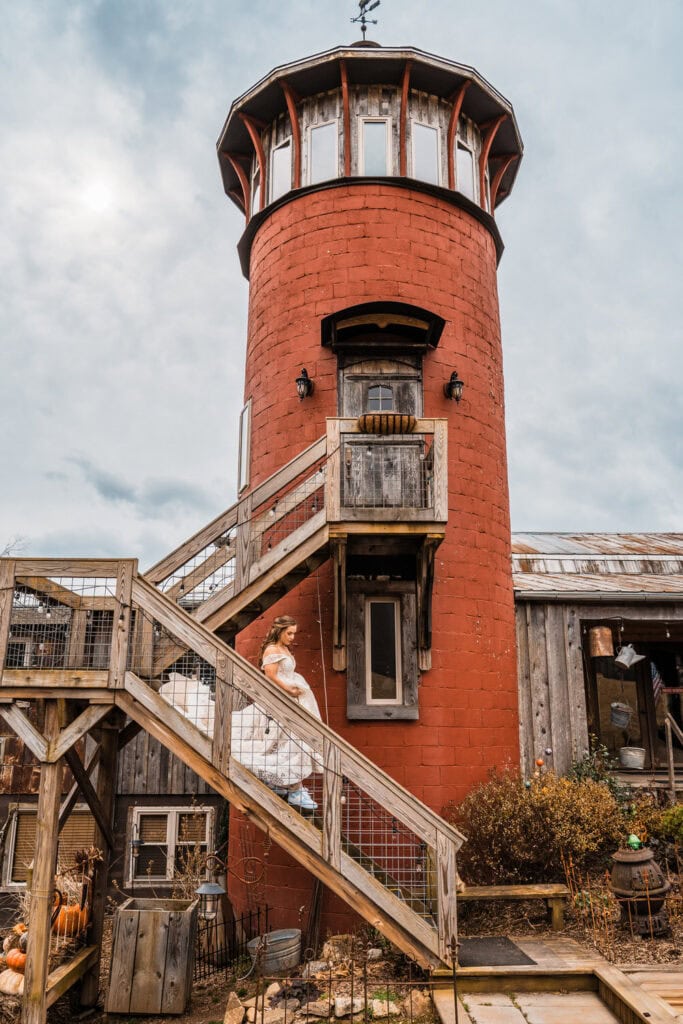
Where We Come In … We help you create your entire Airbnb wedding experience
By now, you’ve probably realized something:
This isn’t just about finding a beautiful Airbnb.
It’s about designing an experience that actually works within it.
And that’s where most couples start to feel stuck.
Because there’s a big difference between:
- finding a place that looks good online
- and creating a day that flows naturally from start to finish
Most people planning an Airbnb wedding assume they have to figure this out on their own.
And to be fair… there aren’t many resources—or professionals—who specialize in this space.
But this is exactly what we do.
As Airbnb hosts ourselves—and after planning and photographing over 100 elopements—we’ve built a deep understanding of what actually works.
Not just visually.
But logistically, spatially, and experientially.
We’ve also built a curated catalog of Airbnb wedding venues and properties that are proven to support this kind of experience—so couples aren’t starting from scratch or guessing from listings.
We don’t just help you find a property.
We help you design everything around it:
- clarifying your vision
- matching you with locations that truly fit
- anticipating challenges before they happen
- and building a plan that actually works in real life
So when your day arrives…
you’re not managing logistics or solving problems.
You’re simply experiencing it.
Explore our elopement experience and packages and see how we guide you through this process
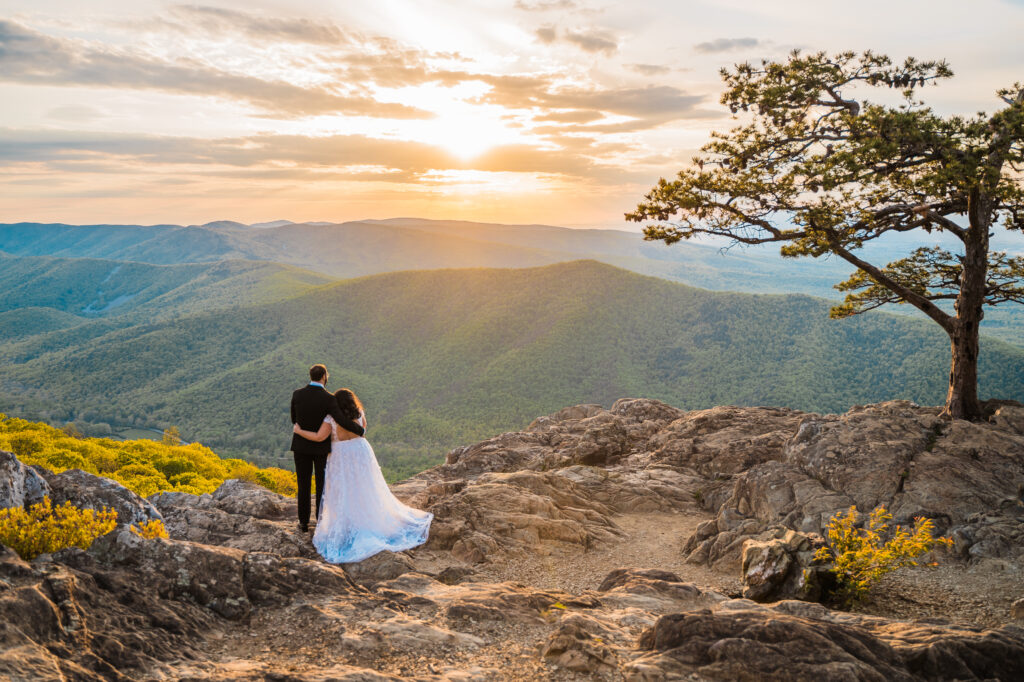
Get Started Planning Your Elopement
We’re ready to help you bring your vision to life of an Airbnb wedding. Reach out to us to start planning the elopement of your dreams!